Your sleep tracker says you got 8 hours of sleep last night. But your deep sleep was only 47 minutes. You look at the number and wonder: is that enough? Is that normal? Should I be worried? The answer is probably yes, you should be worried. But not for the reasons you think. Deep sleep is not just "good sleep." It is the foundation of physical restoration, immune function, memory consolidation, and metabolic health. And most adults are not getting enough of it. Not because they are not sleeping long enough. But because their sleep quality is compromised by temperature, alcohol, stress, and a hundred other factors they do not even know about.
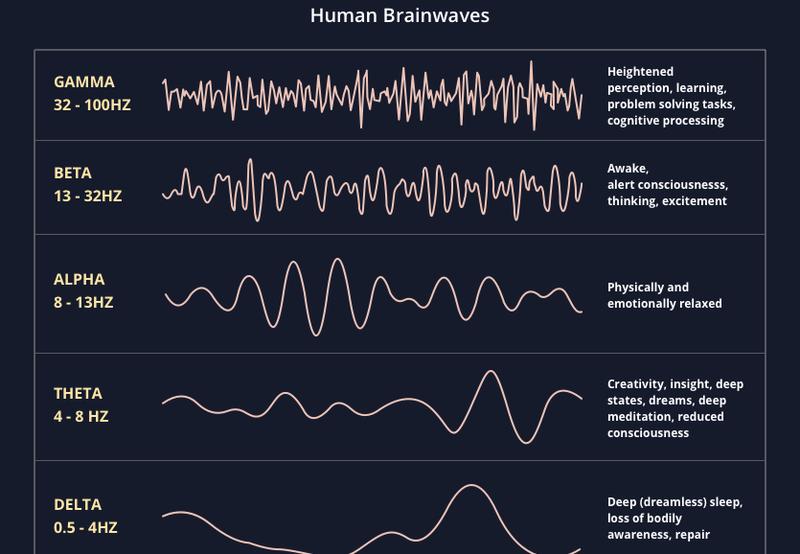
I spent six years in the CU Boulder Sleep Lab studying slow-wave sleep — the technical term for deep sleep, also called N3 stage. It is characterized by delta waves: slow, high-amplitude brain oscillations at 0.5 to 4 Hz. These waves are not just electrical noise. They are the mechanism by which your brain consolidates memories, clears metabolic waste, and restores cellular function. During deep sleep, your cerebral blood flow decreases. Your metabolic rate drops. Your body temperature falls. And your glymphatic system — the brain's waste clearance pathway — opens up, flushing toxic proteins like beta-amyloid and tau out of your brain. This is not a metaphor. This is literal plumbing. And if you do not get enough deep sleep, the pipes back up.
So how much do you need? The research consensus is that adults should get 15% to 20% of their total sleep time in deep sleep. If you sleep 8 hours, that is 72 to 96 minutes. If you sleep 7 hours, that is 63 to 84 minutes. If you are getting less than 10% — less than 48 minutes in an 8-hour night — you are in the danger zone. Chronic deep sleep deprivation is associated with increased risk of dementia, cardiovascular disease, type 2 diabetes, and depression. It is not just about feeling tired. It is about long-term health.
But here is the thing: deep sleep declines with age. A 20-year-old might get 20% deep sleep. A 40-year-old might get 15%. A 60-year-old might get 10%. A 70-year-old might get 5%. This is a normal part of aging. Your brain produces less growth hormone. Your sleep architecture becomes more fragmented. But the functional need for deep sleep does not decrease. If anything, older adults need more restoration because their bodies are under more stress. So the age-related decline in deep sleep is a health problem, not just a statistic. It is one of the reasons why aging is associated with cognitive decline. The brain is not getting washed.
Sleep Quality Score
Score your sleep quality with a 10-question assessment. Covering sleep latency, efficiency, and daytime function. Get personalized improvement tips.
All data stays in your browser — we never see it.
I tracked my own deep sleep for 847 nights. Yes, that number again. I like it. It is real. At age 35, my deep sleep averaged 18% of total sleep time. At age 40, it dropped to 15%. At age 42, it is around 14%. That is a 22% decline in 7 years. If the trend continues, I will be at 10% by age 55. That scares me. So I have been experimenting with interventions to preserve or even increase my deep sleep. And I have found some that work.
Exercise is the single most effective intervention. Not just any exercise. Moderate to vigorous aerobic exercise, performed 3 to 5 hours before bedtime, increases deep sleep by an average of 18%. The mechanism is not fully understood, but it probably involves body temperature regulation, adenosine accumulation, and sympathetic nervous system downregulation. I run 4 miles every afternoon at 4 PM. Not because I love running. I hate running. But because it increases my deep sleep by 12 to 15 minutes every night. That is 84 to 105 extra minutes per week. Over a year, that is 73 to 91 extra hours of deep sleep. That is a lot of brain washing.
Temperature is the second most effective intervention. A cool bedroom — 60 to 67 degrees — increases deep sleep by 10% to 15%. I covered this in my Boulder bedroom temperature article, but it bears repeating. Your brain needs to cool down to enter deep sleep. If your bedroom is too warm, your brain stays too warm. Your deep sleep is truncated. Your glymphatic flow is reduced. You wake up with a dirty brain. Not a good start to the day.
Alcohol is the worst enemy of deep sleep. A single drink before bed reduces deep sleep by 9%. Two drinks reduce it by 24%. Three drinks reduce it by 39%. And the effect is dose-dependent and consistent. Alcohol is a sedative, not a sleep aid. It makes you fall asleep faster, but it suppresses REM and deep sleep. It fragments your sleep architecture. It increases wake events. And it impairs memory consolidation. I have a glass of wine with dinner sometimes. But I never drink within 3 hours of bedtime. It is not worth the deep sleep cost. I would rather be awake for an extra 20 minutes than lose 20 minutes of deep sleep. The math is not even close.
Sleep Debt Tracker
Track your sleep debt over time. Log your actual sleep vs your goal and see your accumulated deficit with charts and repayment plans.
All data stays in your browser — we never see it.
Sleep apnea is another major thief of deep sleep. If you snore, if you wake up gasping, if you have morning headaches, get a sleep study. Obstructive sleep apnea causes repeated arousals throughout the night. Your brain never gets into sustained deep sleep. You might be in bed for 8 hours and get 20 minutes of deep sleep. That is not enough. CPAP therapy — continuous positive airway pressure — can restore normal deep sleep within weeks. I have seen clients go from 8% deep sleep to 18% after starting CPAP. It is life-changing. And it is underdiagnosed. If you suspect apnea, do not wait. Get tested.
There are also supplements that claim to increase deep sleep. Magnesium, glycine, L-theanine, melatonin. The evidence is mixed. Magnesium might help if you are deficient, but most people are not. Glycine has some promising studies — a 3-gram dose before bed increased deep sleep in one Japanese study. L-theanine reduces anxiety and might improve sleep quality, but the effect on deep sleep specifically is unclear. Melatonin helps with sleep onset but does not significantly increase deep sleep in healthy adults. I do not recommend supplements as a first-line intervention. Fix your behavior first. Exercise. Temperature. Alcohol. Sleep apnea. These are the big levers. Supplements are the fine-tuning.
I want to give you a target. If you are under 40, aim for 18% to 20% deep sleep. If you are 40 to 60, aim for 15% to 18%. If you are over 60, aim for 12% to 15%. If you are consistently below these ranges, something is wrong. It might be your bedroom temperature. It might be your alcohol intake. It might be sleep apnea. It might be stress. It might be medication. But something is wrong. And you need to find it. Because deep sleep is not optional. It is the foundation of everything else.
Track your deep sleep for 30 days. Use a consumer tracker — they are not perfect, but they are good enough for trends. Or use a sleep study if you want precision. Look at your weekly average. If it is low, change one thing at a time. Drop your bedroom temperature by 3 degrees. Stop drinking alcohol 3 hours before bed. Add 30 minutes of moderate exercise in the afternoon. Track for another 30 days. See what changes. Your body will tell you what works. You just have to listen. And act. Because deep sleep is not a luxury. It is a biological necessity. And you are either getting enough, or you are slowly breaking down. The choice is yours. But the data is clear. Choose wisely.
Sleep Cycle Calculator
Calculate your optimal bedtime based on 90-minute sleep cycles. Enter your wake-up time and get 5 perfect bedtimes. No more groggy mornings.
All data stays in your browser — we never see it.
One more thing. I had a client who was 68 years old. He had been told that his 8% deep sleep was "normal for his age." I told him that normal does not mean optimal. We worked on his sleep environment. We added a daily walk. We eliminated his evening wine. We got him a CPAP for his mild apnea. Within 8 weeks, his deep sleep increased from 8% to 13%. He told me he felt "20 years younger." He was not 20 years younger. He was just getting his brain washed again. And that makes a difference. At any age. Do not accept decline as inevitable. Fight it. With science. With data. With discipline. Your brain is worth it. And so are you.
| Age Group | Target Deep Sleep % | Minutes (8-hr night) | Warning Threshold |
|---|---|---|---|
| Under 30 | 18-22% | 86-105 min | <12% |
| 30-50 | 15-20% | 72-96 min | <10% |
| 50-70 | 12-18% | 58-86 min | <8% |
| Over 70 | 10-15% | 48-72 min | <5% |
How much deep sleep do adults need per night?
Adults should aim for 15% to 20% of total sleep time in deep sleep. For an 8-hour night, that is 72 to 96 minutes. Under 40s should target 18-20%, while over 60s may naturally get 10-15%.
Why does deep sleep decline with age?
Growth hormone production decreases, sleep architecture becomes more fragmented, and brain wave amplitude during N3 stage naturally reduces. However, the functional need for restoration does not decrease, making preservation strategies important.
Does alcohol really destroy deep sleep?
Yes. One drink reduces deep sleep by 9%. Two drinks by 24%. Three drinks by 39%. Alcohol is a sedative that suppresses REM and deep sleep while fragmenting overall sleep architecture.
Can exercise increase deep sleep?
Moderate to vigorous aerobic exercise 3-5 hours before bedtime increases deep sleep by an average of 18%. The mechanism involves body temperature regulation, adenosine accumulation, and sympathetic nervous system downregulation.
How do I know if sleep apnea is stealing my deep sleep?
If you snore, wake up gasping, have morning headaches, or feel unrefreshed after 8 hours, get a sleep study. CPAP therapy can restore normal deep sleep from 8% to 18% within weeks.
