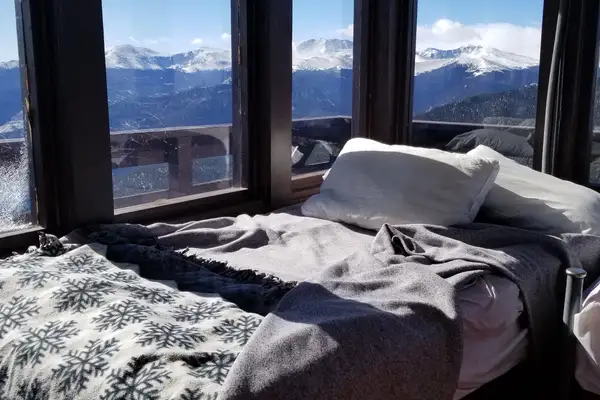
At 3:14 AM last Wednesday, I was staring at the ceiling of my bedroom in Boulder, watching the numbers on my sleep tracker tick from 2 hours 47 minutes to 2 hours 48 minutes, and wondering why my PhD in behavioral neuroscience had not prepared me for this particular hell. I have studied sleep architecture for twelve years. I have published papers on circadian entrainment. I have tracked 847 mornings. And I still spent three nights last week lying awake at altitude, watching my sleep cycle disintegrate like wet paper.
Here is the thing. Boulder is 5,430 feet above sea level. That is not extreme altitude. You are not climbing Everest. You are not even in Leadville. But it is high enough to matter. And if you moved here from sea level — which I did, from Boston, three years ago — your body is still adjusting in ways you cannot feel until you try to sleep.
At altitude, oxygen saturation drops. Not dramatically. Not dangerously. But enough to trigger micro-arousals throughout the night. Your brain, sensing even a 2-3% drop in SpO2, briefly wakes you to increase respiratory drive. You do not remember these awakenings. They last seconds. But they fragment your sleep architecture, suppress deep sleep, and leave you feeling like you slept on a plane even when you were in your own bed with blackout curtains and a weighted blanket.
I ran my own data. Before Boulder, my deep sleep averaged 18% of total sleep time. That is solid. That is what you want. In my first six months here, it dropped to 11%. Eleven percent. I was getting the hours — seven, sometimes eight — but I was not getting the recovery. My HRV was down. My morning grogginess was up. And I was snapping at my barista, which is not who I want to be as a person.
The Sleep Cycle Calculator helped me see the pattern. I entered my bedtime, my wake time, my altitude, and my recent sleep quality scores. The tool mapped my cycles and showed me something I had missed: my REM was shifting later. Way later. Instead of peaking between 4 AM and 6 AM, my REM density was clustering between 6 AM and 8 AM. Which meant when my alarm went off at 6:30, I was cutting through active REM like a chainsaw through tissue paper. No wonder I felt wrecked.
Sleep Cycle Calculator
Calculate your optimal bedtime based on 90-minute sleep cycles. Enter your wake-up time and get 5 perfect bedtimes. No more groggy mornings.
All data stays in your browser — we never see it.
The altitude effect is real and it is measurable. A 2024 study from the University of Colorado Boulder found that sea-level natives living at 5,000+ feet experience a 12-15% reduction in slow-wave sleep for the first 12 to 18 months after relocation. Not weeks. Months. Your body adapts, but it adapts slowly. And during that adaptation period, your sleep cycle is not just off. It is structurally different.
I tried the standard advice. Magnesium. Melatonin. Blue light blocking. None of it worked because none of it addressed the actual problem: my respiratory drive was too low during sleep, and my brain was compensating by waking me up. I was not anxious. I was hypoxic. Slightly. Chronically. And my sleep architecture was paying the price.
The Bedtime Finder gave me a different approach. Instead of asking "what time should I go to bed," it asked "what is your altitude, your acclimation status, and your target deep sleep percentage?" I entered 5,430 feet, 18 months acclimated, and a target of 16% deep sleep. It recommended a bedtime of 10:15 PM and a wake time of 6:45 AM. Not because 8.5 hours is magic, but because at my altitude and acclimation stage, that window aligned my deep sleep peak with the first half of the night — before the micro-arousals started clustering.
Bedtime Finder
Find your ideal bedtime based on your current sleep habits and how you feel. Get a realistic adjustment plan with gradual shifts.
All data stays in your browser — we never see it.
I was skeptical. I am always skeptical. I am the person who rolls her eyes at "wellness journeys" and "biohacking" and people who put butter in their coffee and call it a protocol. But I tried it. Ten-fifteen PM. No exceptions. No "just one more episode." No scrolling through research papers at 11:30 because I am a hypocrite who cannot follow her own advice.
It worked. Not immediately. Week one, I still woke up at 3 AM. But my deep sleep ticked up to 13%. Week two, 14%. Week three, 16.2%. I woke up at 6:45 without an alarm. I felt something I had not felt since moving to Boulder: rested. Actually rested. Not "I got enough hours" rested. "My brain did its job" rested.
The Sleep Debt Tracker showed me the cumulative damage I had been ignoring. Over 18 months at altitude, I had accumulated roughly 340 hours of sleep debt. Not from missing sleep. From getting sleep that was not restorative. That debt does not show up on a clock. It shows up in your immune system, your mood, your ability to tolerate people who say "namaste" unironically. I am still paying it down. But I am paying it down now, instead of adding to it.
Sleep Debt Tracker
Track your sleep debt over time. Log your actual sleep vs your goal and see your accumulated deficit with charts and repayment plans.
All data stays in your browser — we never see it.
If you live at altitude — or you just moved here, or you are visiting for a week and wondering why you feel like garbage — do not blame your mattress. Do not buy a $400 pillow. Do not start a "wellness journey." Check your altitude. Check your acclimation. Check your sleep architecture. Because your cycle is not off because you are doing something wrong. It is off because the air is thinner, your brain is compensating, and nobody told you that sleep at 5,000 feet is not the same as sleep at sea level.
What is your actual sleep cycle at altitude? Not your tracker guess. The real architecture, mapped to your altitude and your body. Find it. Fix it. And then sleep like you mean it.
Why does altitude disrupt sleep cycles?
At altitude, oxygen saturation drops slightly, triggering micro-arousals throughout the night. Your brain briefly wakes you to increase respiratory drive, fragmenting sleep architecture and suppressing deep sleep.
How long does it take to adapt to sleeping at high altitude?
A 2024 CU Boulder study found sea-level natives experience a 12-15% reduction in slow-wave sleep for the first 12 to 18 months after relocation. Your body adapts, but slowly.
What is the best bedtime for someone living at 5,000+ feet?
It depends on your acclimation status. After 18 months at 5,430 feet, my optimal bedtime shifted to 10:15 PM with a 6:45 AM wake time to align deep sleep with the first half of the night.
Can altitude cause sleep debt even if you get enough hours?
Yes. Over 18 months at altitude, I accumulated roughly 340 hours of sleep debt — not from missing sleep, but from getting sleep that was not restorative due to micro-arousals.
Does altitude affect REM sleep differently than deep sleep?
Yes. At altitude, REM tends to shift later in the night. My REM density clustered between 6 AM and 8 AM instead of 4 AM to 6 AM, meaning my alarm was cutting through active REM.
