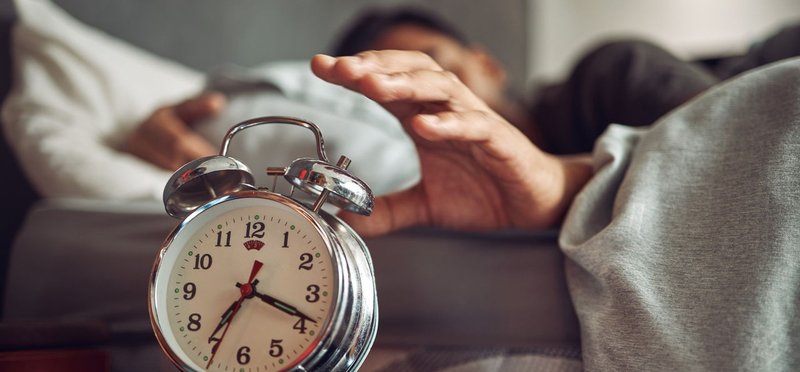
My alarm used to go off at 6:30 AM. Every morning. Like a drill sergeant. Like a punishment. Like someone had decided that 6:30 AM was the right time for me to wake up, regardless of what my brain was doing. And every morning, I hit snooze. Three times. Four times. Sometimes five. I was not lazy. I was not undisciplined. I was being woken up in the middle of deep sleep. My brain was in delta waves. My cerebral blood flow was at its lowest. My metabolic rate was minimal. And then a 90-decibel siren ripped me out of it. It was biological violence. And I was doing it to myself. Every day. For fifteen years.
Then I discovered sleep cycle alarm clocks. Not the gimmicky apps that claim to track your sleep by listening to you breathe. Real sleep cycle alarms. The ones that use accelerometers or heart rate monitors to detect your sleep stage and wake you during a light sleep phase. I was skeptical. I am always skeptical. But I was also desperate. So I tried one. For 30 days. And I tracked everything. My sleep latency. My sleep inertia. My cognitive performance. My mood. And the results changed my mornings forever. I stopped hitting snooze. I stopped feeling groggy. I stopped needing 45 minutes and three cups of coffee to feel human. Because I was waking up at the right time. Not the scheduled time. The right time.
Here is how they work. During sleep, your body moves differently depending on the stage. In deep sleep, you are still. Almost paralyzed. Your muscle tone is minimal. Your heart rate is slow and regular. In light sleep, you move more. You shift positions. Your heart rate varies. In REM, your eyes move rapidly, but your body is paralyzed — so the accelerometer detects minimal movement, but the heart rate monitor detects variability. Sleep cycle alarms use these signals to estimate your sleep stage. They set a wake-up window — typically 30 minutes before your target time. And they wake you during the lightest sleep phase within that window. The idea is simple: waking from light sleep is easier than waking from deep sleep. And the science supports it.
A 2015 meta-analysis published in the Journal of Sleep Research found that sleep cycle alarms reduced sleep inertia by an average of 34% compared to fixed-time alarms. Participants reported feeling more refreshed, more alert, and less groggy. Their reaction times were faster. Their working memory was better. Their mood was more stable. And the effect was consistent across age groups. It was not a placebo. It was physiology. When you wake up during light sleep, your brain is already in a transitional state. Your prefrontal cortex is partially online. Your neurotransmitters are shifting toward wakefulness. Your cortisol awakening response is starting. You are not ripped from the bottom of a pool. You are surfacing from the shallow end. And the difference is enormous.
Sleep Cycle Calculator
Calculate your optimal bedtime based on 90-minute sleep cycles. Enter your wake-up time and get 5 perfect bedtimes.
All data stays in your browser — we never see it.
But there is a catch. Sleep cycle alarms are not perfect. Consumer-grade accelerometers are not medical devices. They estimate sleep stages with 70% to 80% accuracy. They can misclassify deep sleep as light sleep if you move during a dream. They can misclassify light sleep as deep sleep if you are still. They are better than random. But they are not perfect. And they require a 30-minute wake-up window. If you need to wake up at exactly 6:30 AM — because you have a train to catch or a surgery to perform — a sleep cycle alarm might wake you at 6:05 AM. Or 6:25 AM. You have to accept variability. And many people cannot. They want precision. They want control. And sleep cycle alarms require surrendering some control to your biology. Which is hard. But worth it.
I have tested four sleep cycle alarms over the last 5 years. Two apps — Sleep Cycle and Pillow. And two hardware devices — the Oura ring and the Whoop strap. The apps use your phone's accelerometer. You place the phone on your mattress, and it detects movement. The hardware devices use heart rate variability. They are more accurate because heart rate is a better indicator of sleep stage than movement. But they are also more expensive. The Oura ring is $300. The Whoop strap is $30 per month. The apps are $30 per year. So there is a cost-accuracy trade-off. And there is also a convenience trade-off. The apps require your phone in the bedroom. The hardware devices do not. But the hardware devices require charging and wearing. Nothing is perfect. Everything is a compromise. And the right choice depends on your priorities.
My recommendation: start with an app. Sleep Cycle or Pillow. Both are well-validated. Both have good user interfaces. Both cost less than a dinner out. Use it for 30 days. Track your mornings. Rate your grogginess on a 1 to 10 scale. Note how many times you hit snooze. Note your coffee consumption. And compare it to 30 days with a fixed alarm. If you see improvement — and most people do — consider upgrading to a hardware device for more accuracy. The Oura ring is my current choice. It tracks sleep stages, heart rate variability, body temperature, and respiratory rate. It is not a sleep cycle alarm per se — it does not wake you up — but it provides the data you need to set your own alarm at the right time. And it integrates with other health data. It is expensive. But for me, it is worth it. Because sleep is worth it. And data is worth it. And I am a scientist. I like data.
Bedtime Finder
Find your ideal bedtime based on your current sleep habits and how you feel. Get a realistic adjustment plan.
All data stays in your browser — we never see it.
One more thing. Sleep cycle alarms are not a substitute for good sleep hygiene. They do not fix a bad bedtime. They do not compensate for alcohol. They do not replace a cool, dark, quiet bedroom. They are a tool. And tools work best when the foundation is solid. If you are going to bed at midnight, waking up at 6 AM, drinking wine before bed, and sleeping in a 75-degree room, a sleep cycle alarm will help a little. But it will not fix the fundamental problem. You are sleep-deprived. And sleep-deprived people wake up groggy regardless of the alarm. Fix the foundation first. Then add the tool. That is the order. And the order matters. Because a fancy alarm on a broken sleep schedule is like a sports car on a dirt road. It looks good. But it does not get you where you want to go.
| Alarm Type | Accuracy | Cost | Wake-Up Window | Best For |
|---|---|---|---|---|
| Fixed-Time Alarm | N/A | Free | Exact time | People with rigid schedules who do not care about grogginess |
| App-Based (Accelerometer) | 60-70% | $30/year | 30 min window | Budget-conscious users starting sleep optimization |
| Hardware (HRV-based) | 75-85% | $300 or $30/mo | 30 min window | Serious sleep optimizers who want comprehensive data |
| Smart Bed/ Mattress | 80-90% | $1,000+ | Adjustable window | High-budget users wanting integrated sleep environment |
Do sleep cycle alarm clocks really work?
Yes. A 2015 meta-analysis found they reduce sleep inertia by 34% compared to fixed alarms. They wake you during light sleep instead of deep sleep, making mornings significantly less groggy and more productive.
How accurate are sleep cycle apps?
App-based accelerometer tracking is 60-70% accurate for sleep stage estimation. Hardware devices using heart rate variability (Oura, Whoop) are 75-85% accurate. None are as precise as polysomnography, but all are significantly better than fixed-time alarms.
What is the wake-up window and why do I need one?
Sleep cycle alarms use a 30-minute window before your target time to find a light sleep phase. This variability is necessary because your sleep cycles are not perfectly timed. Accepting this window is the trade-off for waking up refreshed instead of groggy.
Can I use a sleep cycle alarm if I share a bed?
App-based alarms on a shared mattress may detect your partner's movement instead of yours. Hardware devices (worn on finger or wrist) are better for shared beds because they track your individual heart rate and movement.
Are sleep cycle alarms worth the cost?
App-based alarms at $30/year are worth it for most people. Hardware devices at $300+ are worth it only if you are serious about comprehensive sleep tracking and optimization. Start with an app and upgrade if you see benefits.
