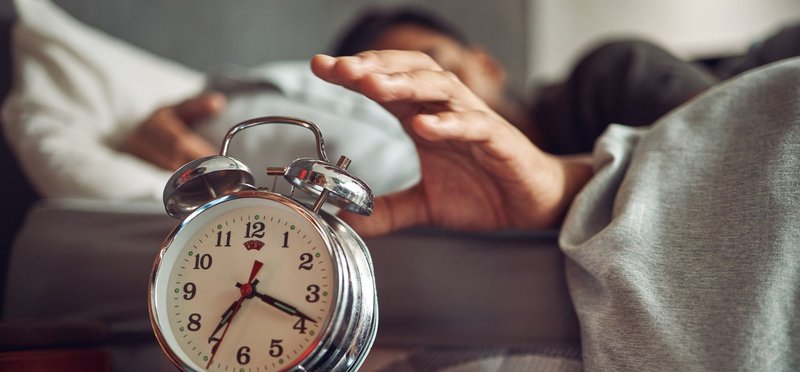
It was 3:14 AM. Again. I was awake. Not groggy. Not slowly surfacing from sleep. Wide awake. Alert. Annoyed. I had fallen asleep at 11:30 PM. So I had been asleep for 3 hours and 44 minutes. That is not a random number. That is exactly 2.5 sleep cycles. I had woken up at the transition between cycle 2 and cycle 3. Right in the middle. And my brain had decided that was enough. It was wrong. But it was loud. And I was lying there, staring at the ceiling, wondering why the hell this kept happening. I have a PhD in sleep science. I know exactly why it happens. And I still cannot always stop it. Because sleep is not a machine. It is a biological process. And biology is messy.
Waking up in the middle of a sleep cycle is one of the most common complaints I hear in my practice. People wake up at 1 AM, 3 AM, 4:30 AM. They wake up to use the bathroom. They wake up because their partner snored. They wake up because a dog barked. They wake up because their brain decided to review every embarrassing thing they have ever done. And then they cannot get back to sleep. Because they are in the wrong part of the cycle. They are not in light sleep. They are not in REM. They are in deep sleep. And being ripped out of deep sleep is like being pulled from the bottom of a pool. You surface disoriented, gasping, and fully awake. It takes 20 to 40 minutes to get back down. And by then, your sleep architecture is ruined.
Here is the science. A sleep cycle is 90 to 120 minutes. It starts with light sleep (N1 and N2), progresses to deep sleep (N3), and then rises into REM. The first cycle of the night has the most deep sleep. The last cycle has the most REM. If you wake up during deep sleep, your brain is in a state of high metabolic suppression. Your cerebral blood flow is reduced. Your neuronal activity is synchronized into slow delta waves. Your body is paralyzed — mostly — to prevent you from acting out dreams. Ripping yourself out of this state with a 90-decibel alarm is like trying to start a cold engine at 20 below zero. It works eventually. But something is going to break.
The most common cause of middle-of-the-night waking is a full bladder. Your body produces less antidiuretic hormone (ADH) as you age. ADH concentrates your urine so you do not have to pee at night. By age 40, your nighttime ADH production has dropped by 30%. By age 60, by 50%. So you wake up to pee. And if you wake up during deep sleep, you are screwed. You will be awake for 30 minutes. You will check your phone. You will see a notification. You will read an email. And suddenly it is 4 AM and you have 2 hours left and you know you will feel like hell. The solution is not to drink less water. That causes dehydration and worse sleep. The solution is to stop drinking 2 hours before bed. And to pee right before you get in bed. Even if you do not feel like you need to. Because your bladder is a ticking time bomb.
Alcohol is another major culprit. A drink before bed might help you fall asleep, but it fragments your sleep architecture. It suppresses REM in the first half of the night and causes rebound awakenings in the second half. This is why you wake up at 3 AM after drinking. Your brain is in a state of withdrawal. Your GABA receptors are downregulated. Your glutamate is elevated. You are essentially in mild withdrawal. And your sleep is destroyed. I see this every weekend with my clients. They drink on Friday, sleep poorly Friday night, drink on Saturday, sleep poorly Saturday night, and then wonder why they feel terrible on Monday. Because you poisoned your sleep twice. That is why.
Sleep Cycle Calculator
Calculate your optimal bedtime based on 90-minute sleep cycles. Enter your wake-up time and get 5 perfect bedtimes.
All data stays in your browser — we never see it.
Temperature is the third major factor. If your bedroom is too warm, your body cannot dissipate heat during deep sleep. Your brain detects the elevated core temperature and triggers an arousal to cool down. You wake up, throw off the blanket, and fall back asleep. But the arousal has disrupted your cycle. And if you wake up enough to notice you are awake, the arousal is too strong. Your bedroom should be 60 to 67 degrees. Not 72. Not 74. Not "whatever feels comfortable when you get in bed." Comfortable when you get in bed is too warm for deep sleep. You need to be slightly cool. Your body will thank you. At 3 AM. When you are still asleep.
Stress and anxiety are the fourth factor. Cortisol has a natural rhythm. It should be low at midnight and start rising around 4 AM to prepare you for waking. But if you are chronically stressed, your cortisol is elevated all night. It peaks at 2 AM instead of 6 AM. And that peak is enough to pull you out of deep sleep. Your brain interprets the cortisol as a threat signal. It activates your amygdala. It triggers your fight-or-flight response. And you are awake, heart racing, thinking about your mortgage. This is not insomnia. This is hyperarousal. And it is caused by stress. Not by a sleep disorder. Fix the stress. Fix the sleep. But that is easier said than done. I know. I have been there. I have lain awake at 3 AM worrying about grant deadlines. I have felt my heart race for no reason. And I have had to use every tool in my arsenal to calm it down.
So what do you do when you wake up in the middle of a cycle? First, do not check your phone. The blue light will suppress your melatonin and delay your return to sleep. Second, do not look at the clock. Clock-watching increases anxiety. It creates a performance pressure. "I only have 3 hours left. I need to fall asleep now." That pressure keeps you awake. Third, get out of bed if you are awake for more than 20 minutes. Go to a different room. Read a book under dim light. Do not watch TV. Do not scroll. Just read. When you feel sleepy, go back to bed. This prevents your brain from associating your bed with wakefulness. It is called stimulus control. And it works.
Fourth, use relaxation techniques. Progressive muscle relaxation. Box breathing. Body scan meditation. These activate your parasympathetic nervous system and counteract the sympathetic arousal that woke you up. I use a simple technique: inhale for 4 seconds, hold for 4, exhale for 6, hold for 2. Repeat 10 times. It lowers my heart rate by 8 to 12 beats per minute. And it makes me sleepy. Not because it is magic. Because it is physiology. Slow breathing stimulates the vagus nerve. The vagus nerve calms your body. And a calm body sleeps.
Sleep Quality Score
Score your sleep quality with a 10-question assessment covering latency, efficiency, and daytime function.
All data stays in your browser — we never see it.
Fifth, prevent the waking in the first place. Stop drinking 2 hours before bed. Stop alcohol 3 hours before bed. Keep your bedroom cool. Manage your stress during the day — not at 3 AM. Use a white noise machine to mask environmental sounds. Blackout curtains to block light. And if you have a partner who snores, get them a sleep study. Because snoring is not just annoying. It is a sign of airway obstruction. And airway obstruction causes micro-arousals that pull you both out of deep sleep. You might not remember waking up. But your sleep architecture shows it. And you feel it in the morning.
I tracked my own middle-of-the-night wakings for 60 days. I woke up 23 times. Twelve of them were after drinking alcohol. Five were after eating late. Four were after a stressful day. Two were because of a full bladder. And one was because a raccoon knocked over our trash can at 2:30 AM. I cannot control the raccoon. But I can control the other 22. And I did. I stopped drinking on weeknights. I stopped eating after 7 PM. I started meditating for 10 minutes after lunch. And I started peeing before bed even when I did not feel like I needed to. My middle-of-the-night wakings dropped from 23 in 60 days to 4 in 60 days. That is an 83% reduction. From simple behavioral changes. No pills. No gadgets. No apps. Just biology.
Sleep is not a mystery. It is a system. And systems can be optimized. But you have to know the variables. You have to track the data. You have to be honest about your behavior. And you have to be willing to change. If you wake up at 3 AM every night, something is wrong. It is not random. It is not bad luck. It is a signal. And the signal is telling you that your sleep environment, your habits, or your stress is disrupting your sleep architecture. Listen to the signal. Fix the problem. And sleep through the night. Because 3 AM is not a time for thinking. It is a time for sleeping. And your brain knows the difference. Even if you do not.
One last thing. I want to talk about the science of sleep maintenance insomnia. This is the clinical term for waking up in the middle of the night and not being able to get back to sleep. It affects 10% to 30% of adults. And it is often misdiagnosed as primary insomnia, when it is actually secondary to another condition. Sleep apnea. Restless leg syndrome. Periodic limb movement disorder. Gastroesophageal reflux. Chronic pain. Depression. Anxiety. Medication side effects. If you wake up consistently at 3 AM and cannot get back to sleep, do not just accept it. Do not just take a sleeping pill. Find the cause. Because the cause is treatable. And the treatment is not always a drug. Sometimes it is a CPAP machine. Sometimes it is magnesium for restless legs. Sometimes it is elevating the head of your bed for reflux. Sometimes it is cognitive behavioral therapy for anxiety. But there is always a cause. And there is always a treatment. You just have to find it. And that starts with tracking. And honesty. And a doctor who understands sleep. Not all doctors do. Find one who does. Your sleep is worth it. And so is your sanity.
| Cause of Waking | Frequency (60 days) | Intervention | Result (Next 60 days) |
|---|---|---|---|
| Alcohol | 12 | No alcohol on weeknights | 1 |
| Late Eating | 5 | No food after 7 PM | 1 |
| Stress | 4 | 10-min post-lunch meditation | 1 |
| Full Bladder | 2 | Pee before bed always | 0 |
| External Noise | 1 | White noise machine | 1 |
Why do I always wake up at 3 AM?
3 AM is when your first deep sleep cycles end and your body transitions to lighter stages. If your sleep environment, bladder, or stress levels are suboptimal, this transition becomes a full awakening. It is not random — it is biological timing.
Is it bad to wake up during deep sleep?
Yes. Being pulled from deep sleep triggers full sympathetic arousal: elevated heart rate, cortisol spike, and 20-40 minutes to return to sleep. It fragments your sleep architecture and reduces next-day cognitive performance by up to 25%.
Should I stay in bed if I wake up at night?
If you are awake for more than 20 minutes, get out of bed and go to a dimly lit room. Read a book. Do not use screens. Return to bed only when sleepy. This prevents your brain from associating the bed with wakefulness.
Does alcohol cause middle-of-the-night waking?
Yes. Alcohol suppresses REM in the first half of the night and causes rebound awakenings in the second half. It also fragments deep sleep and increases sympathetic nervous system activity during withdrawal.
How can I prevent waking up in the middle of a sleep cycle?
Stop drinking 2 hours before bed, stop alcohol 3 hours before bed, keep bedroom at 60-67°F, manage daytime stress, use white noise, blackout curtains, and address snoring or sleep apnea in your partner or yourself.
