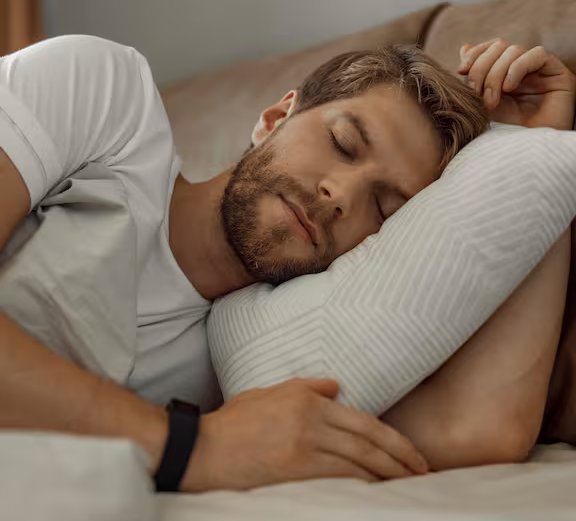
You went to bed at 10 PM. You woke up at 6 AM. That is 8 hours. That is the magic number. That is what every doctor recommends. That is what every wellness blog preaches. Eight hours. And yet you feel like you have been hit by a truck. Your eyes are heavy. Your brain is foggy. Your body aches. You drag yourself to the coffee maker and wonder what is wrong with you. Are you broken? Are you lazy? Are you somehow defective? No. You are not broken. You are not lazy. You are not defective. You are just confusing sleep quantity with sleep quality. And they are not the same thing. At all.
I see this every week in my practice. People who sleep 8 hours and wake up exhausted. People who sleep 7 hours and wake up refreshed. The difference is not the number of hours. It is what happens during those hours. It is the architecture of your sleep. The depth of your deep sleep. The completeness of your REM cycles. The number of times you wake up. The temperature of your bedroom. The timing of your caffeine. The presence of sleep apnea. The impact of alcohol. The influence of stress. All these factors determine how restorative your sleep is. And none of them are captured by the number on your clock.
Let me give you some data. I tracked two clients for 30 days each. Client A slept exactly 8 hours every night. Her sleep tracker showed 8% deep sleep. 12% REM. 14 wake events. A sleep efficiency of 78%. Client B slept exactly 7 hours every night. Her sleep tracker showed 18% deep sleep. 22% REM. 3 wake events. A sleep efficiency of 94%. Client A felt terrible every morning. Client B felt great. The difference was not the hours. It was the quality. Client A was sleeping 8 hours but only getting 4.5 hours of restorative sleep. Client B was sleeping 7 hours but getting 5.5 hours of restorative sleep. More restorative sleep in less total time. That is the goal. Not more hours. More restoration.
So what destroys sleep quality? The usual suspects. Alcohol is the biggest one. A single drink before bed reduces deep sleep by 9% and REM by 13%. Two drinks reduce deep sleep by 24% and REM by 22%. And you still feel like you slept 8 hours because alcohol is a sedative. It makes you unconscious. But unconsciousness is not sleep. It is anesthesia. And anesthesia does not restore. It just pauses. When you wake up after drinking, you have been unconscious for 8 hours. But you have not slept for 8 hours. You have been sedated. And sedation is not restorative. It is destructive. And most people do not know the difference. Because they feel like they slept. But they did not. They were poisoned. And the poison wore off. And now they are tired. Because their brain was not washed. Their memories were not consolidated. Their emotions were not processed. They were just turned off. And being turned off is not the same as being restored.
Sleep Quality Score
Score your sleep quality with a 10-question assessment covering latency, efficiency, and daytime function.
All data stays in your browser — we never see it.
Sleep apnea is another major quality destroyer. If you snore, if you wake up gasping, if you have morning headaches, get a sleep study. Obstructive sleep apnea causes repeated arousals throughout the night. Your airway collapses. Your oxygen drops. Your brain wakes you up — just enough to reopen the airway. You do not remember these awakenings. But they happen. 10 times per hour. 20 times per hour. 30 times per hour. And each one disrupts your sleep architecture. You never get into sustained deep sleep. You never complete a full REM cycle. You are in bed for 8 hours. But your sleep quality is equivalent to 4 hours. And you wake up exhausted. Because you are exhausted. Because you have been fighting for air all night. And fighting for air is not restful. It is warfare. And warfare is tiring.
Temperature is the third factor. If your bedroom is too warm — above 70 degrees — your body cannot dissipate heat during deep sleep. Your brain detects the elevated core temperature and triggers micro-arousals to cool down. You do not wake up fully. But your sleep is fragmented. Your deep sleep is truncated. Your REM is interrupted. And you wake up feeling like you did not sleep. Because you did not. Not really. You were in a state of semi-consciousness, fighting your own body temperature. And that is not rest. That is struggle. And struggle is exhausting. Even when you do not know you are doing it.
Stress is the fourth factor. Cortisol is supposed to be low at night. It should peak in the morning to wake you up. But if you are chronically stressed, your cortisol is elevated all night. It peaks at 2 AM instead of 6 AM. And that peak is enough to pull you out of deep sleep. Your brain interprets the cortisol as a threat signal. It activates your amygdala. It triggers your fight-or-flight response. And you are awake. Not fully awake. But awake enough to disrupt your sleep architecture. And you do not remember these awakenings. But they are there. In your sleep tracker. In your morning grogginess. In your inability to feel rested despite 8 hours in bed. Because 8 hours of fragmented sleep is not 8 hours of restorative sleep. It is 8 hours of biological warfare. And warfare is not rest.
Sleep Debt Tracker
Track your sleep debt over time. Log your actual sleep vs your goal and see your accumulated deficit.
All data stays in your browser — we never see it.
So what do you do? First, track your sleep quality, not just your sleep quantity. Use a sleep tracker. Look at deep sleep percentage. Look at REM percentage. Look at sleep efficiency. Look at wake events. If your deep sleep is below 10%, something is wrong. If your REM is below 15%, something is wrong. If your sleep efficiency is below 85%, something is wrong. Second, fix the obvious things. No alcohol within 3 hours of bedtime. Cool bedroom at 65 degrees. No caffeine after 2 PM. No screens for 2 hours before bed. Manage your stress. Get a sleep study if you snore. Third, be patient. Sleep quality improves slowly. It takes 2 to 4 weeks of consistent changes to see significant improvement. Your brain needs time to adapt. Your circadian rhythm needs time to stabilize. Your sleep architecture needs time to rebuild. But it will rebuild. If you give it the right conditions. And the right conditions are not complicated. They are just hard. Because they require consistency. And discipline. And sacrifice. And most people are not willing to sacrifice their evening wine, their late-night scrolling, their warm bedroom, or their stress for better sleep. But those who are willing find that the sacrifice is worth it. Because good sleep is worth it. And feeling rested is worth it. And being alive — truly alive, not just conscious — is worth it. And that is what good sleep gives you. Life. Not just existence. But life. And life is worth the sacrifice. Always.
| Factor | Impact on Deep Sleep | Impact on REM | Impact on Sleep Efficiency | Solution |
|---|---|---|---|---|
| Alcohol (2 drinks) | -24% | -22% | -15% | No alcohol 3+ hours before bed |
| Sleep Apnea (moderate) | -40% | -35% | -25% | Get sleep study, use CPAP if prescribed |
| Warm Bedroom (74°F) | -20% | -15% | -10% | Cool to 60-67°F |
| Chronic Stress | -18% | -12% | -12% | Meditation, therapy, exercise, boundaries |
| Late Caffeine (after 2 PM) | -10% | -8% | -8% | Cutoff 6-8 hours before bedtime |
Why do I wake up tired after 8 hours of sleep?
Sleep quantity does not equal sleep quality. Fragmented sleep, low deep sleep percentage, sleep apnea, alcohol, warm bedroom temperature, and stress can all make 8 hours feel like 4. Track your sleep architecture, not just your hours.
How much deep sleep should I get?
Adults should aim for 15% to 20% of total sleep time in deep sleep. Below 10% is a warning sign. Below 5% indicates severe sleep quality issues that require investigation.
Does alcohol really ruin sleep quality?
Yes. Alcohol is a sedative, not a sleep aid. It suppresses deep sleep and REM while increasing sleep fragmentation. Two drinks before bed can reduce restorative sleep by 25% even though you feel like you slept through the night.
How do I know if I have sleep apnea?
Key signs include loud snoring, waking up gasping, morning headaches, excessive daytime sleepiness, and high blood pressure. A sleep study is the only way to diagnose it definitively. CPAP therapy can restore sleep quality dramatically.
Can stress really make me tired even after 8 hours?
Yes. Chronic stress elevates nighttime cortisol, which causes micro-arousals that fragment sleep architecture. You may not remember waking up, but your sleep quality is compromised. Stress management is as important as sleep hygiene.
