How many sleep cycles do you need? Five? Six? Seven? The answer is not a fixed number. It depends on your age. It depends on your sleep quality. It depends on your individual biology. But there is a range. And most adults fall within it. And if you are outside that range — consistently getting 3 or 4 cycles instead of 5 or 6 — you are sleep-deprived. Even if you do not feel it. Even if you think you are "fine." Because sleep deprivation is not just about feeling tired. It is about cognitive impairment, emotional dysregulation, metabolic dysfunction, and long-term health damage. And all of that happens when you do not get enough complete sleep cycles.
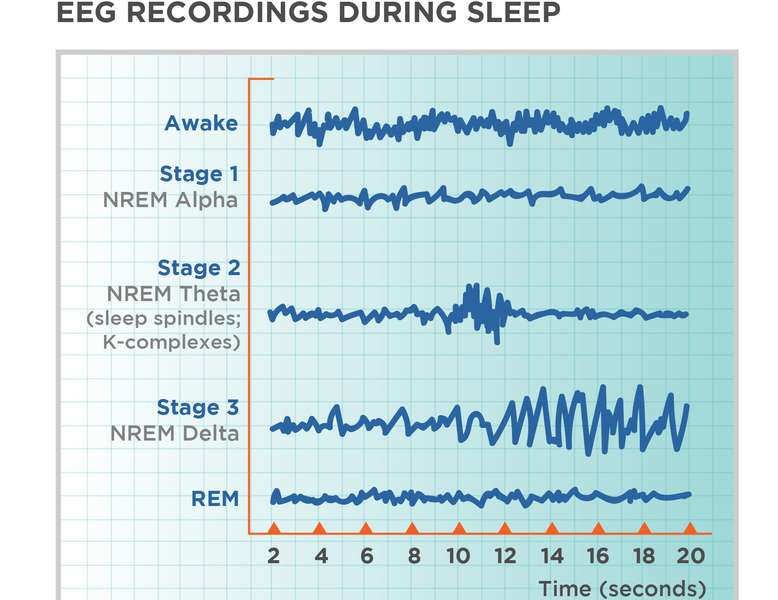
A sleep cycle is 90 to 120 minutes for most adults. It includes light sleep (N1 and N2), deep sleep (N3), and REM. The first cycle has the most deep sleep. The last cycle has the most REM. And you need both. Deep sleep restores your body. REM restores your brain. And you need enough cycles to get enough of both. If you only get 4 cycles, you are getting 4 doses of deep sleep and 4 doses of REM. If you get 6 cycles, you are getting 6 doses of each. The difference is 50% more restoration. And that difference matters. Over time, it matters enormously.
I tracked my own sleep cycles for 847 nights. My average is 5.2 cycles per night. That is on the low end of the healthy range. My cycles average 97 minutes. So 5.2 cycles times 97 minutes is 504 minutes. That is 8.4 hours of sleep. But my sleep latency is 14 minutes. And my wake-after-sleep-onset time is 22 minutes. So my total time in bed is 8.4 hours plus 14 minutes plus 22 minutes. That is 8 hours and 56 minutes. Round up to 9 hours. That is how long I need to be in bed to get 5.2 cycles. And 5.2 cycles gives me 90 minutes of deep sleep and 105 minutes of REM. That is within the healthy range. But it is on the edge. If I get 4.5 cycles, my deep sleep drops to 75 minutes. My REM drops to 85 minutes. And I feel it. I am groggy. I am irritable. I am not myself. And I track it. Because tracking is the only way to know.
Sleep Cycle Calculator
Calculate your optimal bedtime based on 90-minute sleep cycles. Enter your wake-up time and get 5 perfect bedtimes.
All data stays in your browser — we never see it.
The healthy range for adults is 4 to 6 cycles per night. Four cycles is 6 to 7 hours of sleep. Six cycles is 9 to 10 hours. Most adults need 5 to 6 cycles. That is 7.5 to 9 hours of sleep. Some need 4 to 5. That is 6 to 7.5 hours. But these are the short sleepers. The genetically blessed. Less than 1% of the population. If you are not one of them, you need 5 to 6 cycles. And if you are getting 4 or fewer, you are chronically sleep-deprived. Even if you feel fine. Because feeling fine is not the same as being fine. And sleep deprivation is cumulative. It adds up. Night by night. Cycle by cycle. Until something breaks. And by then, it is too late.
Children need more cycles. Teenagers need 5 to 7 cycles. School-age children need 6 to 7 cycles. Toddlers need 7 to 9 cycles. Newborns need 8 to 10 cycles. But their cycles are shorter — 50 to 60 minutes. So the total sleep time is higher. A newborn sleeping 16 hours might get 10 cycles of 50 minutes. A teenager sleeping 9 hours might get 6 cycles of 90 minutes. The number of cycles matters more than the total hours. Because cycles are the unit of restoration. And you need enough units to restore what you used during the day. Your body. Your brain. Your emotions. Your memories. All of it needs restoration. And restoration happens in cycles.
Sleep Quality Score
Score your sleep quality with a 10-question assessment covering latency, efficiency, and daytime function.
All data stays in your browser — we never see it.
I have a client who is a CEO. He sleeps 6 hours a night. He thinks he is one of the genetically blessed short sleepers. He is not. His sleep tracker shows 3.8 cycles per night. His deep sleep is 8%. His REM is 12%. His sleep efficiency is 76%. He is chronically sleep-deprived. But he does not feel it because he has adapted. His baseline has shifted. He thinks 6 hours is enough because he has forgotten what 8 hours feels like. And he is paying the price. His blood pressure is 145 over 92. His fasting glucose is 108. He has chronic headaches. He has mood swings. And he has memory lapses that he dismisses as "getting older." He is 42. He is not getting older. He is getting sleep-deprived. And sleep deprivation looks a lot like aging. Because it accelerates aging. At the cellular level. At the molecular level. At the level of telomeres, inflammation, and oxidative stress. All of which are increased by chronic sleep deprivation. And all of which are reduced by adequate sleep. In cycles.
So how do you know how many cycles you need? Track it. For 30 days. Use a sleep tracker. Count your cycles. Look at your deep sleep percentage. Look at your REM percentage. Look at your sleep efficiency. Look at your morning grogginess. Look at your afternoon energy. Look at your mood. Look at your cognitive performance. And find the number of cycles where everything is optimal. For most adults, that is 5 to 6. For some, it is 4 to 5. For others, it is 6 to 7. But there is a number. And you need to find it. Because guessing is not good enough. And averages are not good enough. You are not average. You are you. And your biology is unique. And your sleep needs are unique. And the only way to know them is to measure them. And adjust. And measure again. Until you find your number. And then protect it. Like your life depends on it. Because it does.
| Age Group | Sleep Cycle Length | Healthy Cycles Per Night | Total Sleep Time | Deep Sleep Target | REM Target |
|---|---|---|---|---|---|
| Newborn | 50-60 min | 8-10 | 14-17 hrs | 20-25% | 45-50% |
| Toddler (1-3) | 60-75 min | 7-9 | 11-14 hrs | 20-25% | 25-30% |
| School-age (6-12) | 90 min | 6-7 | 9-11 hrs | 18-22% | 20-24% |
| Teen (13-18) | 90-100 min | 5-7 | 8-10 hrs | 15-20% | 20-25% |
| Adult (18-64) | 90-120 min | 4-6 | 7-9 hrs | 15-20% | 20-25% |
| Older Adult (65+) | 80-100 min | 4-5 | 7-8 hrs | 10-15% | 15-20% |
How many sleep cycles do adults need per night?
Most adults need 4 to 6 complete sleep cycles per night. This equals 7 to 9 hours of sleep for adults with 90-120 minute cycles. Short sleepers (less than 1% of population) may function on 4 cycles, but most adults need 5 to 6 for optimal health.
Can I function on 4 sleep cycles?
Some people can, but only if they are genetically short sleepers with high sleep efficiency. For most adults, 4 cycles (6-7 hours) results in chronic sleep deprivation with cumulative cognitive, emotional, and metabolic damage.
Do I need more cycles as I age?
No, older adults typically need fewer cycles (4-5) because their cycles become shorter (80-100 minutes). However, deep sleep and REM percentages naturally decline with age, making sleep quality preservation even more important.
How do I count my sleep cycles?
Use a consumer sleep tracker (Oura, Whoop, Fitbit) for 30 nights. Average your cycle count. Aim for 5-6 cycles with at least 15% deep sleep and 20% REM. Adjust bedtime accordingly.
What happens if I consistently get too few cycles?
Chronic cycle deprivation causes cumulative cognitive decline, emotional dysregulation, metabolic dysfunction, cardiovascular stress, and accelerated cellular aging. The damage is often invisible until it becomes severe.
