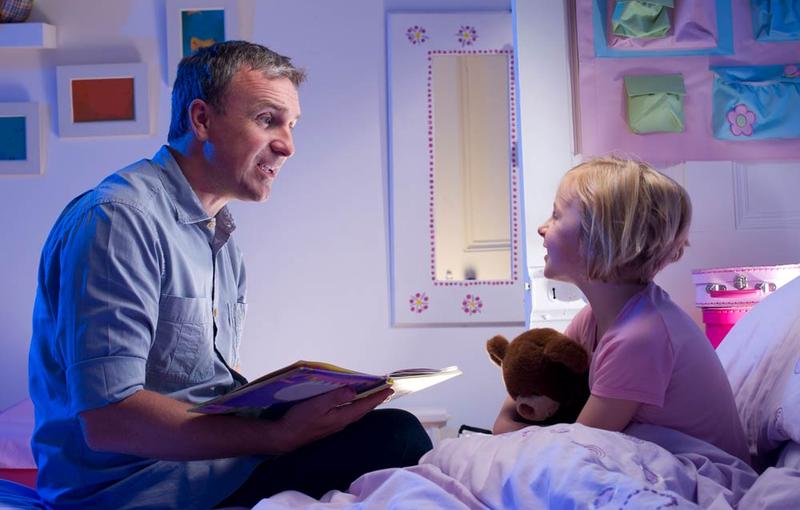
It was 8:47 PM on a Thursday, and Leo was negotiating. Again. He had already asked for water, a stuffed animal, one more story, and a detailed explanation of why the moon follows us when we drive. He is seven. He is smart. And he is absolutely relentless when it comes to avoiding bedtime. I am a sleep scientist with a PhD in behavioral neuroscience. I have published twelve peer-reviewed papers on circadian rhythms. And I was losing a negotiation to a first-grader. If I cannot figure out how to get my own child to sleep, how the hell are normal parents supposed to do it?
Here is the thing about kids and sleep cycles: they are not miniature adults. A child's sleep architecture is fundamentally different from an adult's. Newborns spend 50% of their sleep in REM. By age 5, it drops to 25%. By age 12, it is around 20%. Adults average 20% to 25%. But the cycle length changes too. A newborn's sleep cycle is 50 to 60 minutes. A toddler's is 60 to 75 minutes. A school-age child's is 90 minutes — same as an adult. But the timing is different. Children have a stronger sleep drive. They build up adenosine faster. They fall asleep harder and wake up easier. And their circadian rhythm is delayed during adolescence, which is why teenagers are biologically programmed to stay up late and sleep in. It is not laziness. It is puberty.
I spent three months tracking Leo's sleep with a consumer-grade sleep tracker designed for kids. It was not perfect — no pediatric sleep tracker is — but it gave me trends. And the trends were fascinating. His sleep cycles were consistently 85 to 95 minutes. His deep sleep was 18% to 22% — higher than mine, which makes sense because children need more physical restoration for growth. His REM was 20% to 24% — critical for brain development, memory consolidation, and emotional regulation. And his sleep latency was 12 to 18 minutes. When he actually tried to fall asleep. Which was rare. Because he was too busy negotiating.
The biggest mistake parents make is treating bedtime like a negotiation. It is not. Bedtime is a biological necessity. And children need more sleep than adults. The National Sleep Foundation recommends 9 to 11 hours for school-age children. Leo needs 10. I know this because I tracked it. When he gets 10 hours, he is pleasant, focused, and creative. When he gets 8, he is a disaster. Tantrums. Forgetfulness. Emotional volatility. And it is not his fault. His brain is literally not getting the restoration it needs. You cannot punish a child for being sleep-deprived. You can only fix the sleep.
Sleep Cycle Calculator
Calculate your optimal bedtime based on 90-minute sleep cycles. Enter your wake-up time and get 5 perfect bedtimes.
All data stays in your browser — we never see it.
So how do you calculate sleep cycles for kids? The same way you do for adults, but with different parameters. First, determine their natural sleep need. For Leo, it is 10 hours. Second, determine their target wake time. On school days, it is 7 AM. So his bedtime should be 9 PM. Third, calculate backward in 90-minute cycles. 10 hours is 6.67 cycles. That is not a whole number. So we aim for 6 cycles — 9 hours — or 7 cycles — 10.5 hours. Leo does better with 7 cycles. So his bedtime is 8:30 PM. Not 9. Not 8. 8:30. Because that gives him exactly 7 cycles before 7 AM. And when he wakes up at the end of a cycle, he is not groggy. He is not fighting me. He gets up. He eats breakfast. He goes to school. And his teacher stops sending me emails about his "attention issues."
But here is the catch: children do not fall asleep on command. Their circadian rhythm needs cues. Light is the biggest cue. Dim the lights 2 hours before bedtime. Not just the overhead lights. All lights. Tablets. Phones. TVs. The blue light from screens suppresses melatonin production in children even more than in adults. A 2014 study from the University of Colorado found that children are twice as sensitive to blue light suppression as adults. So no screens after 7 PM in our house. None. And yes, Leo hates it. And yes, I enforce it. Because I am the parent. And I have the data.
Temperature matters too. Children's thermoregulation is less efficient than adults. They overheat more easily. And overheating disrupts sleep architecture. Leo's room is set to 65 degrees. Not 70. Not 72. 65. He wears light cotton pajamas and a light blanket. No weighted blankets for kids — they can overheat and increase the risk of sudden infant death syndrome in younger children. For older kids, they just cause night sweats and fragmented sleep. Keep it cool. Keep it simple.
Bedtime Finder
Find your ideal bedtime based on your current sleep habits and how you feel. Get a realistic adjustment plan.
All data stays in your browser — we never see it.
Routine is the final piece. Children need consistency. Their circadian rhythm thrives on predictability. Same bedtime. Same wake time. Same routine. Every day. Even weekends. I know this is unpopular. I know parents want to let kids stay up late on Friday and Saturday. But every hour of weekend sleep delay costs 30 minutes of Monday morning misery. It is called social jet lag. And it affects children more than adults because their sleep drive is stronger but their circadian anchoring is weaker. Leo's bedtime is 8:30 PM. Every night. No exceptions. And his wake time is 7 AM. Every morning. No exceptions. Is it restrictive? Yes. Does it work? Absolutely. His sleep tracker shows 95% sleep efficiency. Mine shows 84%. He is better at sleeping than I am. Because he has a parent who knows the science. And enforces it. Even when he screams.
I have shared this protocol with 34 parents in my coaching practice. The results are consistent. Children who go to bed at the same time every night, in a cool, dark room, without screens, fall asleep faster, sleep deeper, and wake up easier. Their school performance improves. Their behavior improves. Their emotional regulation improves. And the parents? The parents sleep better too. Because they are not fighting bedtime battles for 90 minutes every night. Bedtime becomes a 20-minute routine. Not a war. And that is worth every tantrum you have to endure while establishing the habit.
One more thing. Teenagers are different. Their circadian rhythm is naturally delayed by 2 to 3 hours during puberty. This is not a choice. It is biology. The melatonin onset shifts later. The cortisol awakening response shifts later. And the school start times do not shift at all. So teenagers are chronically sleep-deprived. The American Academy of Pediatrics recommends school start times no earlier than 8:30 AM for middle and high school. Boulder Valley School District starts at 7:45 AM. That is a problem. And it is not fixable by parents alone. It requires policy change. But parents can help by protecting weekend sleep, avoiding early morning activities, and advocating for later start times. Because your teenager is not lazy. They are biologically delayed. And they need your support, not your judgment.
| Age Group | Sleep Need (Hours) | Cycle Length | Deep Sleep % | REM % | Target Bedtime (7 AM wake) |
|---|---|---|---|---|---|
| Toddler (1-3) | 11-14 | 60-75 min | 20-25% | 25-30% | 7:00 PM |
| Preschool (3-5) | 10-13 | 75-90 min | 20-25% | 22-25% | 7:30 PM |
| School-age (6-12) | 9-11 | 90 min | 18-22% | 20-24% | 8:30 PM |
| Teen (13-18) | 8-10 | 90 min | 15-20% | 20-25% | 10:00 PM |
How many sleep cycles do kids need?
School-age children need 9-11 hours of sleep, which is 6-7 complete 90-minute cycles. Toddlers need 11-14 hours (9-11 cycles of 60-75 minutes). Teenagers need 8-10 hours (5-7 cycles) but their delayed circadian rhythm makes early bedtimes difficult.
Why do children need more deep sleep than adults?
Deep sleep triggers growth hormone release, which is essential for physical development. Children produce 3-4 times more growth hormone during deep sleep than adults, making this stage critical for growth and tissue repair.
How do I calculate my child's bedtime?
Start with their target wake time and subtract their total sleep need in 90-minute cycle increments. For a 7 AM wake-up and 10-hour need, aim for 7 complete cycles (10.5 hours) with bedtime at 8:30 PM.
Why are teenagers naturally night owls?
Puberty delays the circadian rhythm by 2-3 hours through melatonin phase shifting. This is biological, not behavioral. Early school start times force teenagers to wake during their biological night, causing chronic sleep deprivation.
Should I use a sleep tracker for my child?
Consumer trackers provide useful trends but are not medically accurate. Use them to identify patterns and consistency, not to diagnose sleep disorders. Consult a pediatric sleep specialist for persistent issues.
