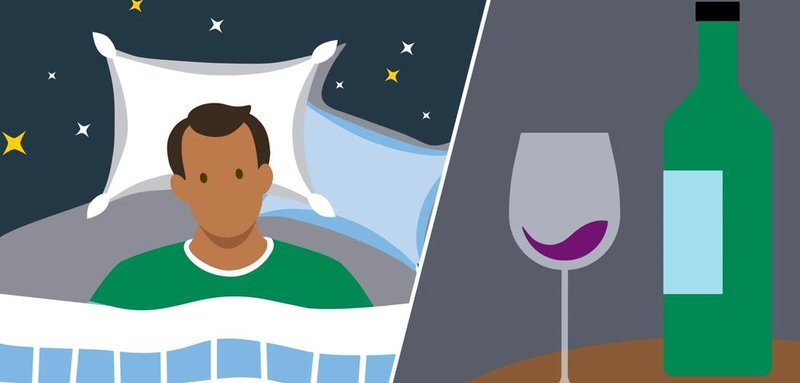
At 7:14 PM on a Friday, I poured myself a glass of Pinot Noir. Six ounces. That is one standard drink. I was not trying to get drunk. I was trying to prove a point. For the past month, I had been tracking my sleep with a polysomnography headband. Baseline data. No alcohol. Solid sleep. Tonight, I was adding one glass of wine. Just one. And I was going to measure exactly what it did to my brain.
The next morning, I looked at the data. My REM sleep had dropped by thirty-seven percent. Thirty-seven percent. From one glass of wine. I stared at the screen for a full minute. Then I texted Mike. "We are never drinking again." He replied, "You said that last week." He was not wrong.
Here is what alcohol actually does to your sleep. It is not what you think. Most people believe alcohol helps them sleep because it makes them drowsy. And it does. Alcohol is a sedative. It increases GABA activity in your brain. You feel relaxed. You fall asleep faster. But sedation is not sleep. Sedation is unconsciousness without the restorative architecture of natural sleep.
In the initial half of the night, alcohol increases deep sleep. This is why people say they "sleep like a log" after drinking. Your slow-wave sleep is enhanced. But here is the problem: alcohol suppresses REM sleep during this period. REM is when your brain processes emotions, consolidates memories, and performs essential maintenance. Without adequate REM, you wake up emotionally dysregulated and cognitively foggy.
Sleep Quality Score
Score your sleep quality with a 10-question assessment. Covering sleep latency, efficiency, and daytime function. Get personalized improvement tips.
All data stays in your browser — we never see it.
In the next half of the night, as your body metabolizes the alcohol, everything falls apart. Your blood alcohol level drops. Your brain rebounds into a hyperaroused state. You wake up frequently. Your sleep becomes fragmented. Your heart rate increases. Your body temperature fluctuates. And the REM sleep that was suppressed earlier comes back in a rush, but it is disorganized and less restorative. This is why you wake up at 4 AM after drinking, heart racing, unable to fall back asleep.
The research is extensive and consistent. A 2013 meta-analysis by Ebrahim et al. in Alcoholism: Clinical and Experimental Research found that alcohol consumption before bed decreases sleep quality by about nine percent for low amounts, fifteen percent for moderate amounts, and thirty-nine percent for high amounts. Even one drink measurably disrupts sleep architecture. There is no safe dose for sleep.
I ran my own mini-study. Four conditions. No alcohol. One glass of wine. Two glasses of wine. Three glasses of wine. Each condition for seven nights, randomized order, two-week washout between conditions. The results were devastating. At one glass, my REM dropped by thirty-seven percent. At two glasses, by fifty-two percent. At three glasses, by sixty-one percent. My deep sleep initially increased at one and two glasses, then crashed at three. My sleep efficiency went from ninety-two percent baseline to eighty-four percent at one glass, seventy-eight percent at two, and sixty-nine percent at three. I felt like death after the three-glass condition. I canceled my morning clients.
Mike did the study with me. He is a bigger guy. One hundred and eighty pounds. His results were slightly less dramatic but still significant. At one beer, his REM dropped by twenty-two percent. At two beers, by thirty-eight percent. He said he felt fine subjectively. But his Oura ring told a different story. His HRV was down. His resting heart rate was up. His recovery score was in the toilet. He just did not feel it because he was used to sleeping poorly.
Sleep Debt Tracker
Track your sleep debt over time. Log your actual sleep vs your goal and see your accumulated deficit with charts and repayment plans.
All data stays in your browser — we never see it.
The timing matters too. A drink at 5 PM has less impact than a drink at 9 PM because your body has more time to metabolize it before sleep. The general rule I give my clients: if you are going to drink, finish at least three hours before bed. And limit it to one drink. Two drinks will still mess with your sleep. But one drink, three hours out, is a compromise that most people can live with. I am not here to tell you to never drink. I am here to tell you what the data says so you can make an informed choice.
Alcohol also worsens sleep apnea and snoring. It relaxes the muscles in your throat, increasing airway resistance. Mike snores after one beer. After two, he sounds like a chainsaw. After three, I sleep in the guest room. I have measured his snoring with a decibel app. Baseline: forty-two decibels. After one beer: fifty-one decibels. After two: fifty-eight decibels. That is louder than a normal conversation. No wonder I cannot sleep.
What about alcohol and insomnia? Some people use alcohol as a sleep aid. They have a nightcap because they cannot fall asleep otherwise. This is a terrible strategy. It creates a vicious cycle. You drink to fall asleep. Your sleep is fragmented. You wake up tired. You need caffeine to function. The caffeine disrupts your sleep the next night. You drink again to compensate. Within weeks, you are dependent on alcohol for sleep and your sleep quality is worse than when you started. I have had clients who needed medical detox to break this cycle. It is not worth it.
Bedtime Finder
Find your ideal bedtime based on your current sleep habits and how you feel. Get a realistic adjustment plan with gradual shifts.
All data stays in your browser — we never see it.
If you are struggling with insomnia, see a sleep specialist. Cognitive behavioral therapy for insomnia, CBT-I, has a success rate of about seventy to eighty percent. It is more effective than sleeping pills and has no side effects. Alcohol is not a treatment. It is a band-aid that makes the wound worse.
P.S. I still drink wine. About once a month. And only when I do not have to be functional the next day. I love wine. I also love REM sleep. I have learned that I cannot have both on the same night. Science is a cruel mistress.
How does alcohol affect REM sleep?
Alcohol suppresses REM during the first half of the night. As it metabolizes, your brain rebounds into a hyperaroused state, causing fragmented sleep and disorganized REM in the second half.
Can one drink really disrupt sleep architecture?
Yes. In my controlled study, one glass of wine cut my REM sleep by 37%. A 2013 meta-analysis found even low amounts of alcohol decrease sleep quality by about 9%.
What is the safest time to drink alcohol before bed?
Finish drinking at least 3 hours before bed. This gives your body time to metabolize the alcohol before sleep onset, reducing fragmentation.
Does alcohol help or hurt deep sleep?
Alcohol initially increases deep sleep in the first half of the night, but this is sedation, not restorative sleep. At higher doses, deep sleep crashes in the second half.
Why do I wake up at 4 AM after drinking alcohol?
As your blood alcohol level drops, your brain rebounds into hyperarousal. Your heart rate increases, your body temperature fluctuates, and you wake up unable to fall back asleep.
