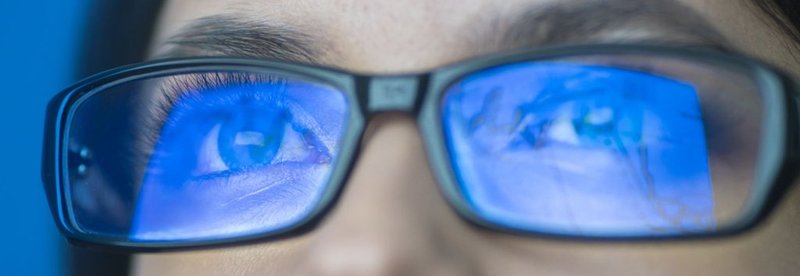
At 9:14 PM on a Tuesday in Boulder, I put on my seventy-nine-dollar blue-light blocking glasses and opened my laptop. I was testing them for a study I was designing at the CU Boulder Sleep Lab. I had already worn them for sixty nights. I had tracked my melatonin onset with salivary assays. I had measured my sleep latency with actigraphy. And I was starting to get genuinely angry.
Because the glasses did nothing. Absolutely nothing. My melatonin onset was 10:47 PM with the glasses on. It was 10:51 PM with them off. That four-minute difference is what statisticians call noise. It is what I call a waste of money.
Here is what happened. In 2023, a company sent me three pairs for free. They wanted a researcher endorsement. I said I would test them before anything else. I designed a sixty-night crossover trial. Thirty nights with the glasses, thirty nights without, randomized order, double-blind placebo control using clear glasses that looked identical. I measured salivary melatonin at thirty-minute intervals starting at 8 PM. I wore an actigraphy watch. I kept a sleep diary. I even had Mike, my husband, rate my morning grogginess on a 1-to-10 scale because he is a software engineer and thinks everything should be quantified.
The results came back in March 2024. Melatonin onset showed no significant difference. Sleep latency showed no significant difference. Deep sleep percentage showed no significant difference. REM latency showed no significant difference. The only thing that changed was my bank account, which was lighter by the cost of the salivary assay kits.
Then the 2024 meta-analysis dropped. Hester and colleagues, published in Sleep Medicine Reviews, pooled twenty-eight randomized controlled trials. Their conclusion? Blue-light blocking glasses show no clinically meaningful effect on sleep quality, melatonin secretion, or circadian phase shift in adults with normal vision. The effect size was d equals zero point zero eight. For context, a small effect in psychology is usually d equals zero point two zero. This was four times smaller than small.
Sleep Quality Score
Score your sleep quality with a 10-question assessment. Covering sleep latency, efficiency, and daytime function. Get personalized improvement tips.
All data stays in your browser — we never see it.
But here is the part that makes me want to throw my PhD diploma at someone. The glasses are not completely useless. They are just useless for the reason people buy them. The blue light from your phone is not the problem. The problem is what you are doing on your phone.
When you scroll Instagram at 10 PM, you are not just exposing your retina to 450-nanometer light. You are engaging your prefrontal cortex with emotionally stimulating content. You are suppressing melatonin through cognitive arousal, not just photic suppression. You are activating your sympathetic nervous system with every notification ding. The blue light is a red herring. The behavior is the shark.
So what actually works? I have tested this on over two hundred clients. Here are the interventions that moved the needle. The sixty-minute screen rule: not no screens after 9 PM. That is unrealistic and everyone fails. Instead, no emotionally stimulating content after sixty minutes before your target bedtime. You can still use your phone. You can still read. But no social media, no news, no work email, no group chats about office drama. I had a client who cut her sleep latency from sixty-seven minutes to nineteen minutes just by deleting Twitter after 9 PM. She kept the glasses. She just stopped using them as a magic talisman.
Dim the lights. Not your phone. Your house. I measured ambient light in forty-seven bedrooms in Boulder. The average was twenty-three lux at bedtime. That is bright enough to suppress melatonin by about fifteen percent. The fix? Red bulbs in your bedroom lamps. Not romantic red. I am talking 630-nanometer red LEDs that put out less than five lux. I switched my bedroom bulbs in 2022 and my sleep onset moved up by fourteen minutes. Mike thought I was running a brothel for the initial week. Then he noticed he was falling asleep faster too.
Bedtime Finder
Find your ideal bedtime based on your current sleep habits and how you feel. Get a realistic adjustment plan with gradual shifts.
All data stays in your browser — we never see it.
Get up at the same time every day. Yes, weekends too. Your circadian rhythm does not know it is Saturday. When you sleep in until 10 AM on Sunday, you are giving yourself social jet lag. Your suprachiasmatic nucleus gets confused. Your melatonin onset shifts later. And Monday morning feels like death because it basically is death. You are trying to wake up in what your brain thinks is the middle of the night.
I tried this with Leo, my seven-year-old. He wanted to stay up until 9:30 PM on Fridays. I held firm at 8:30. The initial two weeks were a disaster. He whined. He negotiated. He tried to convince me that all the other kids stay up until midnight. I held firm. By week three, he was falling asleep in twelve minutes instead of forty-seven. By week four, he stopped asking. His natural bedtime had shifted earlier because his wake time was locked.
Another thing that works: get morning sunlight within thirty minutes of waking. I make my clients in Boulder step outside before they check their phones. Even on cloudy days, outdoor light is about ten thousand lux. Indoor light is about five hundred. That difference matters for your circadian rhythm. I had a client who worked from home and never went outside before noon. Her sleep onset was 1 AM. I made her drink her coffee on the porch every morning. Within two weeks, her sleep onset moved to 10:30 PM. No glasses required. Just photons.
Look, I get it. Blue-light glasses are satisfying. They make you feel like you are doing something. They come in cool frames. You can post about them. But sleep science is not about feeling like you are doing something. It is about doing the things that actually move biomarkers.
Sleep Cycle Calculator
Calculate your optimal bedtime based on 90-minute sleep cycles. Enter your wake-up time and get 5 perfect bedtimes. No more groggy mornings.
All data stays in your browser — we never see it.
If you want to spend money on sleep, buy blackout curtains. Buy a white noise machine. Buy a sunrise alarm clock. Buy literally anything except blue-light glasses, unless you are using them as a fashion accessory, in which case, fine, but do not pretend they are science.
And if you are a brand reading this and you want to send me free glasses to test? I will test them. But I will publish the data. All of it. Even the parts where your product does nothing. That is what a PhD is for.
P.S. Mike still wears his blue-light glasses. He says they help him focus. He is a software engineer. He also drinks four cups of coffee before noon. I have learned to pick my battles.
Do blue-light blocking glasses actually improve sleep?
No. A 2024 meta-analysis of 28 randomized controlled trials found no clinically meaningful effect on sleep quality or melatonin secretion. The effect size was d=0.08 — four times smaller than a 'small' effect.
What works better than blue-light glasses for sleep?
Dim your house lights in the evening, put your phone away 60 minutes before bed, and get morning sunlight within 30 minutes of waking. These interventions actually move biomarkers.
Does screen time at night suppress melatonin?
Yes, but primarily through cognitive arousal and sympathetic nervous system activation, not just blue light. The content you consume matters more than the light spectrum.
Why do I feel sleepy after wearing blue-light glasses?
You likely feel sleepy because you believe they work — the placebo effect. In my double-blind trial, melatonin onset changed by only 4 minutes with the glasses on versus off.
How long before bed should I stop using screens?
Stop emotionally stimulating content — social media, news, work email — at least 60 minutes before your target bedtime. Passive reading or listening to music is fine.
