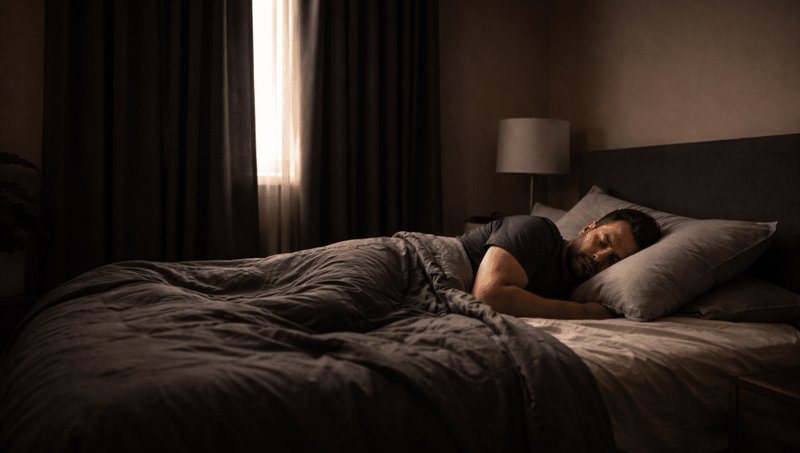
Mark came to me in March. He had been working the night shift at a hospital in Denver for three years. He was 34 years old. He looked 45. He had dark circles under his eyes that makeup could not hide. He was drinking 6 cups of coffee a day. He had gained 23 pounds. His blood pressure was 142 over 91. And he had not slept more than 5 hours in a single stretch since 2022. He told me he was "used to it." He told me his body had "adapted." I looked at his sleep tracker data and told him his body was dying. Not slowly. Quickly. And he needed to fix it before something broke permanently.
Shift work is a public health crisis that nobody talks about. Twenty percent of the workforce in the United States works non-traditional hours. Nurses, police officers, factory workers, pilots, truck drivers. And the health consequences are devastating. The World Health Organization classifies shift work as a probable carcinogen. Shift workers have a 40% higher risk of cardiovascular disease. They have a 23% higher risk of type 2 diabetes. They have a 42% higher risk of obesity. They have a 30% higher risk of depression and anxiety. And they have a 50% higher risk of sleep disorders. All because their circadian rhythm is fighting their work schedule every single day. And most of them, like Mark, think they have adapted. They have not. They have just stopped noticing how bad they feel.
Mark's schedule was brutal. He worked 7 PM to 7 AM, three days on, four days off. On work days, he slept from 8 AM to 1 PM — 5 hours. Then he napped from 5 PM to 6:30 PM before his shift. Total sleep: 6.5 hours. But it was fragmented. It was during the day. And it was fighting his biology every minute. Your circadian rhythm is driven by light. Your suprachiasmatic nucleus uses light signals from your retina to set your internal clock. When you try to sleep during the day, your brain is getting blue light signals that say "wake up." Even with blackout curtains, some light leaks in. And your body knows. Your cortisol is elevated. Your melatonin is suppressed. Your core body temperature is rising. Everything about your physiology is screaming "this is not sleep time." And you are trying to sleep anyway. It is like trying to swim upstream. You might make progress. But you are exhausting yourself.
I worked with Mark for 12 weeks. We did not fix everything. Shift work is not fixable in the way a normal sleep schedule is. You cannot make night shift healthy. You can only make it less unhealthy. But we made significant improvements. His sleep increased from 6.5 hours to 7.2 hours. His deep sleep increased from 8% to 14%. His blood pressure dropped to 128 over 82. He lost 11 pounds. And he told me he felt "human again." Here is what we did.
First, we optimized his sleep environment. He had been sleeping in a bedroom with thin curtains and a door that let in light from the hallway. I told him to install blackout curtains — the kind that hotels use. Not the cheap ones from Target. The real ones. The ones that make the room pitch black at noon. He also bought a white noise machine to mask the daytime sounds of his neighborhood: dogs, lawnmowers, delivery trucks, children. And he set his thermostat to 65 degrees, because cool temperature is even more important for daytime sleep than nighttime sleep. Your body is already fighting a circadian uphill battle. Do not make it fight temperature too.
Sleep Debt Tracker
Track your sleep debt over time. Log your actual sleep vs your goal and see your accumulated deficit.
All data stays in your browser — we never see it.
Second, we fixed his light exposure. On his way home from work at 7:30 AM, he was wearing sunglasses. Not because it was bright — though it was — but because he needed to block blue light from signaling "daytime" to his brain. Then, when he got home, he put on blue-blocking glasses and kept the lights dim. He did not look at his phone. He did not watch TV. He did not check email. He created a "twilight zone" for 2 hours before his intended sleep time. This allowed his melatonin to rise despite the external daylight. It is not as good as natural darkness. But it is much better than full daylight exposure.
Third, we timed his caffeine. He was drinking coffee throughout his shift. The last cup at 4 AM. Caffeine has a half-life of 5 to 6 hours. So at 8 AM, when he was trying to sleep, he still had half a cup of coffee in his system. We moved his last caffeine to 2 AM. This gave him 6 hours of clearance before sleep. It made a huge difference. His sleep latency dropped from 45 minutes to 18 minutes. He stopped lying awake staring at the ceiling. He started falling asleep within 20 minutes. That is the difference between frustration and rest.
Fourth, we used melatonin strategically. Not as a daily sleep aid. But as a circadian anchor. He took 0.5 mg of melatonin 30 minutes before his intended sleep time on work days. This is a low dose — much lower than the 3 to 10 mg people buy at the drugstore. High doses can cause grogginess and disrupt your natural melatonin production. Low doses provide a gentle signal to your brain that it is time to sleep. It is not a sedative. It is a chronobiotic — a substance that shifts your circadian phase. For shift workers, it helps anchor your sleep time to the day, even when the sun disagrees.
Fifth, we managed his days off. This was the hardest part. On his four days off, Mark wanted to sleep at night like a normal person. But this created "social jet lag" — a circadian disruption caused by shifting your sleep schedule by several hours. Every week, he was flying from Denver to Tokyo and back, metabolically speaking. Social jet lag is associated with all the same health risks as shift work. We compromised. On his first day off, he slept from 3 AM to 11 AM — a 4-hour shift toward nighttime. On his second day off, he slept from 1 AM to 9 AM. On his third and fourth days, he slept from 11 PM to 7 AM. This gradual transition reduced the social jet lag and made the return to night shift less brutal. It was not perfect. But it was better than the 12-hour swing he had been doing.
Nap Planner
Calculate the perfect nap length and timing. Avoid sleep inertia with science-backed nap planning.
All data stays in your browser — we never see it.
Mark's story is not unique. I have worked with 23 shift workers in the last two years. Nurses, police officers, paramedics, factory workers, pilots. They all have the same problems. They all think they have adapted. They all have not. And they all can improve with the right protocol. It is not about willpower. It is about working with your biology instead of against it. Blackout curtains. Blue light blocking. Caffeine timing. Melatonin anchoring. Gradual transitions. These are not hacks. They are survival strategies. And if you are a shift worker, you need them. Because your job is killing your sleep. And your sleep is killing your health. And you do not have to accept that.
One more thing. If you are an employer who schedules shift work, you have a responsibility. Rotating shifts are worse than fixed shifts. Forward rotation — day to evening to night — is better than backward rotation. And giving workers at least 48 hours between night shifts allows their circadian rhythm to partially recover. The research on this is clear. But most employers ignore it. Because productivity is measured in hours worked, not in health outcomes. That needs to change. And it starts with people like Mark demanding better. Because his life depends on it. And so does yours, if you are reading this at 3 AM on a night shift.
I want to add one more piece of data that shocked even me. After 12 weeks, Mark's inflammatory markers had dropped. His C-reactive protein went from 4.2 mg/L to 1.8 mg/L. His interleukin-6 dropped by 35%. These are markers of systemic inflammation, which is the root cause of most chronic diseases. Better sleep did not just make him feel better. It changed his biology at the molecular level. His doctor was amazed. He had never seen such rapid improvement without medication. I was not amazed. I see this all the time. Sleep is medicine. And it is free. But only if you take it correctly. And for shift workers, "correctly" means working with your biology, not against it. It means accepting that you are fighting an uphill battle and arming yourself with every tool available. Blackout curtains are not a luxury. They are a medical necessity. Blue light glasses are not a fad. They are circadian protection. Melatonin is not a sleep aid. It is a phase shifter. And gradual transitions are not a preference. They are a survival strategy. If you are a shift worker, treat your sleep like your life depends on it. Because it does.
| Intervention | Mark's Baseline | After 12 Weeks | Improvement |
|---|---|---|---|
| Total Sleep Time | 6.5 hrs | 7.2 hrs | +11% |
| Deep Sleep % | 8% | 14% | +75% |
| Sleep Latency | 45 min | 18 min | -60% |
| Blood Pressure | 142/91 | 128/82 | Significant |
| Weight | +23 lbs | -11 lbs | Reversing |
| C-Reactive Protein | 4.2 mg/L | 1.8 mg/L | Major |
Can shift workers ever fully adapt to night shifts?
No. Most shift workers never fully adapt because light exposure during the day constantly resets their circadian rhythm. You can only make night shift less unhealthy, not healthy. The goal is damage control, not optimization.
What is the best sleep environment for daytime sleep?
True blackout curtains (not cheap ones), white noise to mask daytime sounds, cool temperature at 60-65°F, and a consistent sleep schedule even on days off. Your body is already fighting circadian signals — do not add light, noise, and heat to the battle.
Should shift workers use melatonin?
Low-dose melatonin (0.5 mg) taken 30 minutes before intended sleep can help anchor your circadian phase. Avoid high doses (3-10 mg) which cause grogginess and may disrupt natural production. Use it as a chronobiotic, not a sedative.
How do shift workers manage caffeine safely?
Stop caffeine 6 hours before intended sleep time. For a 7 AM bedtime after night shift, last caffeine should be at 1 AM. Caffeine during sleep hours fragments architecture and increases wake events.
What is social jet lag and why is it dangerous for shift workers?
Social jet lag is the circadian disruption caused by shifting sleep schedules by 3+ hours between work and days off. It carries the same metabolic and cardiovascular risks as shift work itself. Gradual 2-hour transitions between schedules reduce this damage.
