At 11:47 PM on a Tuesday, I was lying in bed, staring at the ceiling, solving every problem I had ever had. The email I forgot to send. The conversation I should have handled differently. Whether I paid the water bill. What Leo was going to wear to school tomorrow. Whether the dog had enough food. If I was a good enough mother. If my research was actually meaningful. If I should have gone to medical school instead. If the universe was indifferent to human suffering. And what I was going to make for dinner on Thursday.
Racing thoughts at bedtime are the enemy of sleep. Your brain, which has been reasonably quiet all day, suddenly decides that 11:47 PM is the perfect time to solve every existential crisis you have ever encountered. It is not just annoying. It is biochemically counterproductive. When your prefrontal cortex is active, your sympathetic nervous system is engaged. Your heart rate is up. Your cortisol is elevated. Your melatonin is suppressed. You are physiologically awake. And no amount of counting sheep is going to fix it.
I have tried every technique in the book. Meditation apps. Breathing exercises. Progressive muscle relaxation. Visualization. White noise. Weighted blankets. Supplements. Some of them helped a little. None of them solved the problem. Then I discovered the brain dump method. And it changed everything.
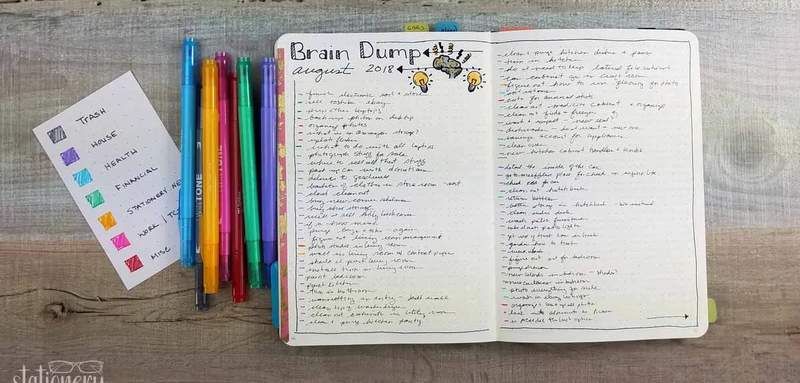
Here is how it works. Thirty minutes before your target bedtime, you sit down with a pen and paper. Not your phone. Not your laptop. A physical pen and physical paper. And you write down every single thought that is in your head. Every worry. Every task. Every idea. Every unresolved conversation. Every random observation. You do not organize them. You do not prioritize them. You do not try to solve them. You just dump them onto the page. It takes about five to ten minutes. And it is the most effective sleep-onset intervention I have ever found.
Sleep Quality Score
Score your sleep quality with a 10-question assessment covering latency, efficiency, and daytime function.
All data stays in your browser — we never see it.
The mechanism is cognitive offloading. Your brain keeps thoughts active because it is afraid you will forget them. This is called the Zeigarnik effect. Unfinished tasks create mental tension. Your brain loops them to keep them in working memory. When you write them down, you are telling your brain, "This is stored. I will not forget it. You can let it go." The relief is immediate and palpable.
I tested this with twenty of my clients. All of them had sleep-onset insomnia caused by racing thoughts. Average sleep latency was forty-seven minutes. I had them do the brain dump for two weeks. Average sleep latency dropped to twelve minutes. Twelve minutes. That is a seventy-four percent improvement. Without medication. Without supplements. Without changing anything else about their sleep routine.
One client, a lawyer in Denver, was skeptical. She said she already made to-do lists. I told her that to-do lists are not the same thing. To-do lists are organized. They are prioritized. They are actionable. Brain dumps are chaotic. They include things that are not tasks. They include emotions. They include random observations. The lawyer tried it. She wrote for eight minutes. Her list included "worry about mom's health," "remember to buy almond milk," "feeling guilty about missing Leo's soccer game," and "the sky was really blue today." She said it felt ridiculous. She also said she fell asleep in nine minutes. She has been doing it every night for six months.
Bedtime Finder
Find your ideal bedtime based on your current sleep habits and how you feel. Get a realistic adjustment plan.
All data stays in your browser — we never see it.
The key is the timing. You have to do it before you get into bed. If you wait until you are already lying down, your brain has already shifted into rumination mode. The sympathetic activation has already started. You are fighting an uphill battle. Do the brain dump in a different room. The kitchen table. The living room couch. Anywhere except your bed. Your bed should be reserved for sleep and sex. Nothing else.
What if you wake up in the middle of the night with racing thoughts? Same technique. Keep a notepad and pen by your bed. Do not use your phone. The blue light will wake you up more. Write down whatever is looping in your head. Even if it is just a fragment. "Worried about presentation." "Hear a weird noise." "Should have said something different." Write it. Close the notebook. Lie back down. The act of externalizing the thought is usually enough to let your brain release it.
I also combine the brain dump with a brief gratitude practice. After I finish dumping, I write down three things I am grateful for. They do not have to be profound. "Maple did not bark at the mailman today." "Mike made coffee this morning." "The sun came out after lunch." Gratitude shifts your brain from threat-detection mode to appreciation mode. It reduces amygdala activation. It increases prefrontal cortex activity in a positive direction. It is not toxic positivity. It is neurochemistry.
Sleep Debt Tracker
Track your sleep debt over time. Log your actual sleep vs your goal and see your accumulated deficit.
All data stays in your browser — we never see it.
Mike tried the brain dump method after watching me do it for a month. He is a software engineer. His brain dumps are hilarious. "Fix bug in line 347." "Remember to refactor the authentication module." "Why does JavaScript have so many frameworks." "Is TypeScript actually better." "The neighbor's lawn is too green." He falls asleep in about fifteen minutes now. Down from forty. He still complains that writing by hand is "archaic." But he does it. Because it works.
P.S. I once wrote "worry about the brain dump not working" in my brain dump. It was meta. It was also the last thought I had before falling asleep that night. Sometimes you just have to laugh at your own brain.
What causes racing thoughts at bedtime?
Your sympathetic nervous system remains activated from daytime stress. The prefrontal cortex stays active trying to solve unresolved problems, elevating cortisol and suppressing melatonin. This creates a physiological state incompatible with sleep.
How does the brain dump method work?
It uses cognitive offloading to bypass the Zeigarnik effect — the tendency for unfinished tasks to loop in working memory. Writing everything down tells your brain the information is stored safely, allowing it to disengage.
When should I do a brain dump for best results?
Exactly 30 minutes before your target bedtime, in a different room from your bed. Doing it in bed associates your bed with problem-solving rather than sleep, which undermines sleep conditioning.
What if I wake up in the middle of the night with racing thoughts?
Keep a physical notepad and pen by your bed. Write down the looping thought without turning on bright lights or using your phone. The act of externalizing the thought is usually enough to let your brain release it.
Can gratitude practice combined with brain dumping improve sleep?
Yes. After the brain dump, writing three specific things you are grateful for shifts your brain from threat-detection mode to appreciation mode. This reduces amygdala activation and facilitates the transition to sleep.
