At 4:47 PM on a Tuesday in December, the sun was already gone. It had set at 4:32 PM. In Boulder, December gives you about nine hours of daylight. And most of those hours, I am inside, working, seeing clients, writing papers, pretending that the darkness outside is not slowly crushing my circadian rhythm. By January, my sleep schedule is a mess. I go to bed at midnight. I wake up at 8 AM. I feel groggy all day. And I know exactly why.
Seasonal affective disorder, or SAD, affects about five percent of adults in the United States. But subclinical winter blues, the kind that messes with your sleep without making you clinically depressed, affects far more. Maybe twenty percent. Maybe thirty. In Boulder, where the mountains block the afternoon sun and the winter days are short, it feels like everyone is struggling.
Here is the mechanism. Your circadian rhythm is anchored by light. Specifically, morning light. When you do not get enough morning light, your suprachiasmatic nucleus gets confused. Your melatonin onset shifts later. Your sleep onset shifts later. You become a night owl against your will. And because you still have to wake up for work, you accumulate sleep debt. The result is chronic winter grogginess.
I have been fighting this battle for ten years. Here is my protocol. It works. It is not fun. But it works.
Bedtime Finder
Find your ideal bedtime based on your current sleep habits and how you feel. Get a realistic adjustment plan.
All data stays in your browser — we never see it.
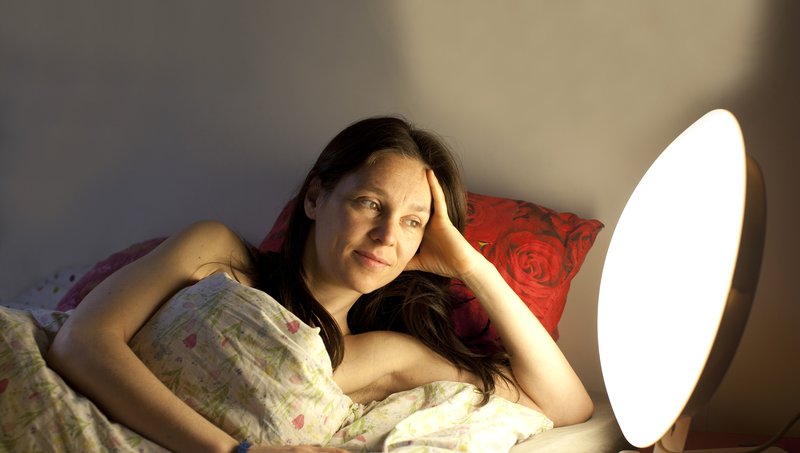
Step one: light therapy. I use a ten-thousand-lux light therapy lamp for thirty minutes every morning, starting in October and continuing through March. I sit in front of it while I drink my coffee. I do not look directly at it. I just let the light hit my eyes from the side. A 2005 meta-analysis by Golden and colleagues in the American Journal of Psychiatry found that light therapy was as effective as antidepressants for seasonal affective disorder. For subclinical winter blues, the effect is even more pronounced because you are catching it early.
Step two: maximize natural light exposure. I go outside every day at lunch. Even when it is twenty degrees. Even when it is snowing. Even when I do not want to. Outdoor light, even on an overcast day, is about one thousand lux. Indoor office light is about three hundred. That difference matters. I walk Maple. I eat lunch on a bench. I stand in the parking lot like a weirdo. I do not care. My circadian rhythm needs the photons.
Step three: consistent wake time. This is the hardest one in winter. When it is dark and cold, sleeping in feels like the only rational choice. But your circadian rhythm does not care about your feelings. I wake up at 6:30 AM every day, winter or summer. Yes, it is dark in December. Yes, it sucks. But consistency anchors my rhythm. I use a sunrise alarm clock that gradually brightens my room starting at 6:00 AM. By 6:30, the room is fully lit. My brain thinks the sun has risen. It has not. But my brain does not know that.
Sleep Quality Score
Score your sleep quality with a 10-question assessment covering latency, efficiency, and daytime function.
All data stays in your browser — we never see it.
Step four: evening light management. In winter, it gets dark early. Your brain thinks it is bedtime at 6 PM. You have to fight this. Keep your house lights bright in the evening. Not blue-bright. Just normal bright. Then dim them two hours before bed. This creates a clear day-night contrast. I use smart bulbs that automatically dim at 8 PM. It is pretentious. It is also effective.
Step five: vitamin D. Most Americans are deficient in winter. Vitamin D plays a role in serotonin production, which affects mood and sleep. I take two thousand IU daily from October through March. I get my levels checked every year. Last January, my level was thirty-two nanograms per milliliter. The optimal range is forty to sixty. I increased to four thousand IU. By March, I was at forty-eight. My winter sleep quality improved noticeably.
Step six: exercise. Winter makes you want to hibernate. Resist this urge. Exercise increases core temperature, boosts mood, and improves sleep quality. I run three times a week, even in the snow. I ski on weekends. I do yoga in my living room when it is too cold to go out. Movement is medicine. Sedentary behavior in winter is a recipe for circadian disaster.
Sleep Cycle Calculator
Calculate your optimal bedtime based on 90-minute sleep cycles. Enter your wake-up time and get 5 perfect bedtimes.
All data stays in your browser — we never see it.
Social connection matters too. Winter isolation worsens mood and sleep. I make a point to see friends regularly. We have a monthly board game night. We go to the brewery on Fridays. We complain about the cold together. Communal suffering is bonding. And it keeps my mood stable, which keeps my sleep stable.
Leo struggles with winter too. He gets cranky when he cannot play outside. I make sure he gets morning light. We walk to school instead of driving when the weather allows. I bought him a light therapy lamp for his desk. He uses it while he does homework. He says it makes him feel "less like a caveman." I did not teach him that phrase. He came up with it himself. I am proud and slightly concerned.
If your winter sleep disruption is severe, see a doctor. Seasonal affective disorder is real and treatable. Light therapy, antidepressants, and cognitive behavioral therapy all have strong evidence. Do not suffer in silence. Do not blame yourself. Your brain is responding to a real environmental challenge. Give it the tools it needs.
P.S. I am writing this in August. The sun sets at 8 PM. I have five more months before the darkness returns. I am already dreading it. But I am also already prepared. The lamp is charged. The vitamin D is stocked. The running shoes are by the door. Winter will not win this year.
How does winter affect sleep quality?
Shorter daylight hours confuse your suprachiasmatic nucleus, shifting melatonin onset later. This causes delayed sleep onset, accumulated sleep debt, and chronic winter grogginess even without clinical depression.
Does light therapy actually work for winter sleep problems?
Yes. A 2005 meta-analysis found 10,000-lux light therapy was as effective as antidepressants for seasonal affective disorder. For subclinical winter blues, morning light exposure is even more effective because you are catching the problem early.
How much outdoor light do I need in winter?
Even overcast days provide 1,000-10,000 lux outdoors versus 300-500 lux indoors. A 30-minute outdoor walk at lunch provides significantly more circadian-anchoring light than sitting near a window all day.
What temperature should my bedroom be in winter?
65-68 degrees Fahrenheit year-round. Resist the urge to overheat your bedroom in winter. Temperatures above 72 degrees disrupt sleep architecture and reduce deep sleep percentage regardless of season.
Can vitamin D supplements improve winter sleep?
Yes, indirectly. Most Americans are vitamin D deficient in winter. Vitamin D plays a role in serotonin production, which affects mood and sleep. Aim for 2,000-4,000 IU daily from October through March, with annual level checks.
