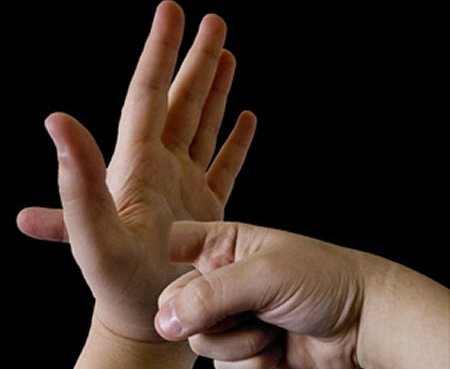
At 4:23 AM on a Tuesday in July, I realized I was dreaming. I was standing in the middle of Pearl Street Mall in Boulder, but the buildings were purple and the sky was green. I looked at my hands. They had six fingers. That is my reality check. I always count my fingers in dreams. In real life, I have five. In dreams, the number changes. I had six. I was lucid.
I spent six months in a lucid dreaming study at CU Boulder in 2017. We were testing whether lucid dreaming could be used for nightmare treatment in PTSD patients. The results were promising. But what I learned personally was even more interesting. Lucid dreaming is not magic. It is a skill. And like any skill, it can be taught.
Here is what lucid dreaming actually is. It is awareness that you are dreaming while you are still in the dream. Your prefrontal cortex, which is usually offline during REM sleep, partially reactivates. You gain conscious control over the dream narrative. You can fly. You can talk to dream characters. You can change the scenery. Some people use it for creative problem-solving. Others use it for nightmare rehearsal therapy. I mostly use it to eat pizza without calories.
The prevalence in the general population is about fifty-five percent of people have had at least one lucid dream in their lifetime. But frequent lucid dreamers, defined as one or more per month, are only about twenty-three percent. The good news is that frequency can be increased with training. A 2020 meta-analysis by Stumbrys et al. found that cognitive techniques can increase lucid dream frequency by about two to four times baseline.
Sleep Quality Score
Score your sleep quality with a 10-question assessment. Covering sleep latency, efficiency, and daytime function. Get personalized improvement tips.
All data stays in your browser — we never see it.
Here is the protocol I teach my clients. It takes about four to six weeks to see results. Be patient. Your brain needs time to learn this.
Step one: dream journaling. Keep a notebook by your bed. Write down everything you remember as soon as you wake up. Do not wait. Dreams fade within minutes. The act of recording them trains your brain to pay attention to dream content. After two weeks of consistent journaling, most people report increased dream recall. I journal every morning. Even when I only remember a fragment. A color. A feeling. It all counts.
Step two: reality checks. Throughout the day, ask yourself, "Am I dreaming?" Do not just ask. Test. Look at your hands. Count your fingers. Try to push your finger through your palm. In a dream, your finger will go through. In real life, it will not. The key is to make this a habit. Do it every time you walk through a doorway. Every time you check your phone. Every time you see a mirror. In the study, participants who did ten reality checks per day had a lucid dream rate of about thirty percent after four weeks. Those who did two per day had a rate of about eight percent. Frequency matters.
Step three: the MILD technique. Mnemonic Induction of Lucid Dreams. Developed by Stephen LaBerge at Stanford in 1980. As you are falling asleep, repeat to yourself, "Next time I am dreaming, I will remember that I am dreaming." Visualize yourself becoming lucid in a recent dream. Feel the excitement. The intention sets up a prospective memory cue that triggers during REM sleep. It sounds like woo-woo nonsense. But LaBerge published it in a peer-reviewed journal. It works for about forty-six percent of people who practice it consistently.
Sleep Cycle Calculator
Calculate your optimal bedtime based on 90-minute sleep cycles. Enter your wake-up time and get 5 perfect bedtimes. No more groggy mornings.
All data stays in your browser — we never see it.
Step four: the WBTB technique. Wake Back to Bed. Set an alarm for five to six hours after your bedtime. Wake up. Stay awake for fifteen to thirty minutes. Do something that engages your prefrontal cortex. Read about lucid dreaming. Do reality checks. Then go back to bed. The idea is that you fall back asleep directly into REM sleep, which is when lucid dreams are most likely. This technique has the highest success rate but also the highest sleep disruption cost. I do not recommend it for people with insomnia or irregular schedules. Mike tried it once. He stayed awake for two hours and could not fall back asleep. He was cranky all day. He has not tried it since.
Galantamine, a cholinesterase inhibitor used for Alzheimer's, has been shown to increase lucid dream frequency when taken during the WBTB period. A 2018 study by LaBerge and colleagues found that eight milligrams of galantamine increased lucid dream probability by about forty-two percent compared to placebo. But it is a prescription medication with side effects. I do not recommend it for recreational lucid dreaming. The cognitive techniques are safer and nearly as effective.
What about lucid dreaming and sleep quality? This is the question I get most often. Does trying to lucid dream ruin your sleep? The answer is nuanced. If you are using WBTB, yes, it can fragment your sleep architecture. But if you are just doing reality checks and dream journaling during normal waking hours, there is no evidence that it harms sleep quality. In fact, some studies suggest that lucid dreaming is associated with better emotional regulation and reduced nightmare frequency. The PTSD study I worked on found that lucid dreaming rehearsal therapy reduced nightmare distress by about sixty percent in veterans.
Bedtime Finder
Find your ideal bedtime based on your current sleep habits and how you feel. Get a realistic adjustment plan with gradual shifts.
All data stays in your browser — we never see it.
Leo is too young for lucid dreaming training. He is seven. But he already has vivid dreams. Last week he told me he dreamed he was a dinosaur who could talk. I asked him if he knew he was dreaming. He said, "No, but I knew I was awesome." Fair enough.
P.S. My most memorable lucid dream happened during the CU Boulder study. I was flying over the Flatiron Mountains. I could feel the wind on my face. I could smell the pine trees. It lasted about two minutes of dream time. When I woke up, I felt more rested than I had in weeks. The brain is weird. And wonderful.
What is lucid dreaming?
Lucid dreaming is awareness that you are dreaming while still in the dream. Your prefrontal cortex partially reactivates, giving you conscious control over the dream narrative. About 55% of people have had at least one lucid dream.
How long does it take to learn lucid dreaming?
With consistent practice of reality checks and dream journaling, most people see their first lucid dream within 4 to 6 weeks. Frequency increases with practice — daily reality checkers achieve about 30% success rate after one month.
Does lucid dreaming affect sleep quality?
Dream journaling and reality checks during waking hours do not harm sleep quality. However, the WBTB (Wake Back to Bed) technique can fragment sleep architecture and is not recommended for people with insomnia.
What is the MILD technique for lucid dreaming?
MILD (Mnemonic Induction of Lucid Dreams) involves repeating "Next time I am dreaming, I will remember that I am dreaming" while falling asleep, combined with visualizing a recent dream. It works for about 46% of consistent practitioners.
Can lucid dreaming help with nightmares?
Yes. Lucid dreaming rehearsal therapy reduced nightmare distress by about 60% in veterans with PTSD. The ability to recognize a nightmare as a dream and change its outcome is a powerful therapeutic tool.
