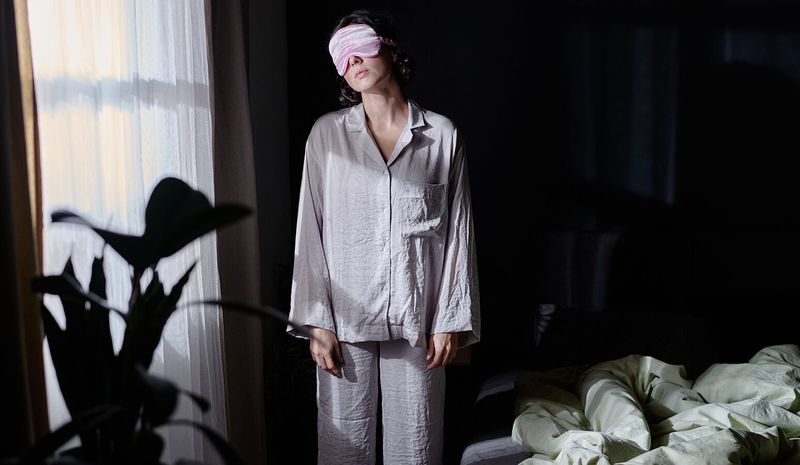
At 3:47 AM on a night in February 2019, I woke up and could not move. My eyes were open. I could see the ceiling of my bedroom in Boulder. I could hear Mike snoring beside me. But I could not lift my arm. I could not turn my head. I could not even wiggle my toes. And there was a shadow in the corner of the room that looked like it was watching me.
I have had sleep paralysis twenty-three times in my life. I am a sleep scientist with a PhD in behavioral neuroscience. I know exactly what is happening in my brain during an episode. I can recite the neurochemistry by heart. And it is still terrifying every single time.
Here is what is actually happening. During REM sleep, your brain paralyzes your body. This is called REM atonia, and it is a good thing. It prevents you from acting out your dreams. If you did not have REM atonia, you would punch your partner, fall out of bed, or try to fly off your balcony every time you dreamed about flying. The paralysis is mediated by two neurotransmitters: glycine and GABA, which inhibit motor neurons in your spinal cord. Your brain is essentially saying, "Hey, we are doing some important dream work up here. Do not move anything below the neck."
Sleep paralysis happens when you wake up during REM sleep but your brain has not turned off the paralysis switch yet. You are conscious. Your prefrontal cortex is online. But your motor cortex is still offline. You are trapped in a body that will not obey commands. It usually lasts between a few seconds and a couple of minutes. It feels like eternity.
Sleep Quality Score
Score your sleep quality with a 10-question assessment covering latency, efficiency, and daytime function.
All data stays in your browser — we never see it.
The hallucinations are the worst part. About seventy-five percent of people who experience sleep paralysis report visual, auditory, or tactile hallucinations during the episode. These are hypnagogic or hypnopompic hallucinations, depending on whether they happen while falling asleep or waking up. Your brain is still in a dream-like state while your eyes are open. So you see things that are not there. Shadows. Figures. Sometimes faces. I once saw a tall man in a hat standing at the foot of my bed. I knew he was not real. I knew it was a hallucination. But my amygdala, the fear center of my brain, did not care about my PhD. It was screaming danger.
The prevalence is higher than most people think. A 2011 meta-analysis by Sharpless and Barber found that about eight percent of the general population experiences sleep paralysis regularly. Among college students, it is closer to twenty-eight percent. Among people with narcolepsy, it is around forty percent. It is more common in people with anxiety, PTSD, and irregular sleep schedules. It is also more common when you sleep on your back. I do not know why the supine position triggers it, but the data is consistent across dozens of studies.
So how do you stop it? I have tried everything. Here is what actually works. Sleep on your side. I know, I know. Everyone says this. But the data is real. A 2002 study by Cheyne found that sixty percent of sleep paralysis episodes occur in the supine position. When I trained myself to sleep on my side, my episodes dropped from about six per year to one per year. It is not a cure, but it is a massive reduction.
Sleep Cycle Calculator
Calculate your optimal bedtime based on 90-minute sleep cycles. Enter your wake-up time and get 5 perfect bedtimes.
All data stays in your browser — we never see it.
Keep a regular sleep schedule. Sleep paralysis is strongly linked to sleep deprivation and irregular sleep-wake cycles. When you are overtired, you spend more time in REM sleep during the early morning hours, which is when sleep paralysis most commonly occurs. I see this pattern in my clients all the time. They pull an all-nighter for a deadline, crash the next night, and then wake up paralyzed at 4 AM. The fix is boring but effective: go to bed at the same time every night.
Reduce stress. This is the hardest one. Sleep paralysis is correlated with anxiety and hyperarousal. Your sympathetic nervous system is already on high alert. When you wake up paralyzed, your panic response is amplified. I started doing ten minutes of diaphragmatic breathing before bed after my worst episode in 2019. My episodes became less frequent and less intense. The breathing does not prevent the paralysis, but it reduces the panic response, which makes the whole experience less traumatic.
What do you do during an episode? This is what I tell my clients. Do not fight it. Fighting makes it worse. Your panic triggers more adrenaline, which keeps you awake but paralyzed longer. Instead, focus on moving one small muscle. I wiggle my toes. It sounds ridiculous, but it works. The motor pathway to your toes is shorter and easier to activate than the pathway to your arms or legs. Once you get one muscle moving, the paralysis breaks like a dam. The whole episode is over in seconds.
Bedtime Finder
Find your ideal bedtime based on your current sleep habits and how you feel. Get a realistic adjustment plan.
All data stays in your browser — we never see it.
Remind yourself that it is harmless. I know this is hard when there is a shadow demon sitting on your chest. But sleep paralysis has never killed anyone. It has never caused brain damage. It has never led to any physical harm. It is a temporary mismatch between your waking brain and your sleeping body. That is all. Your brain will sort it out. It always does.
I still get sleep paralysis occasionally. The last one was six months ago. I woke up, could not move, saw a dark shape in the corner. I wiggled my toes. I reminded myself that I am a scientist and this is just neurochemistry. The episode lasted about fifteen seconds. Then I rolled over and went back to sleep. It is still scary. But it is manageable. And that is the point.
P.S. Mike has never had sleep paralysis. He says it sounds "metal." He is a software engineer. He thinks everything scary sounds metal. I love him, but he is an idiot.
What causes sleep paralysis?
You wake up during REM sleep but your brain has not turned off REM atonia — the paralysis that prevents acting out dreams. Your motor cortex is offline while your prefrontal cortex is awake.
Are sleep paralysis hallucinations dangerous?
No. They are hypnagogic or hypnopompic hallucinations caused by your brain still being in a dream-like state while your eyes are open. About 75% of people with sleep paralysis experience them.
How common is sleep paralysis?
About 8% of the general population experiences it regularly. Among college students it is 28%, and among people with narcolepsy it is around 40%. It is also more common in people with anxiety and irregular sleep schedules.
How do you stop a sleep paralysis episode?
Do not fight it — panic triggers more adrenaline and prolongs the episode. Focus on wiggling one small muscle, usually your toes. Once one muscle moves, the paralysis breaks like a dam.
Can you prevent sleep paralysis?
Sleep on your side (60% of episodes occur on the back), maintain a regular sleep schedule, reduce stress with breathing exercises, and avoid sleep deprivation. These reduced my episodes from 6 per year to 1 per year.
