At 11:03 PM on a Monday in October, I lay in bed with a polysomnography headband strapped to my forehead, listening to what sounded like a waterfall. Not a real waterfall. A digital one. It was pink noise, and I was on night seventeen of a thirty-night experiment comparing white noise and pink noise for sleep quality. Mike thought I had lost my mind. He was not entirely wrong.
I have always been sensitive to sound. Living in Boulder, I am used to quiet. Our house is on a dead-end street. The loudest thing at night is Maple, our dog, dreaming about squirrels. But when I travel for conferences, hotel noise destroys my sleep. The HVAC system. The elevator ding. The couple arguing in the room next door. I started using a white noise machine in 2018. It helped. But then I read about pink noise. And I got curious.
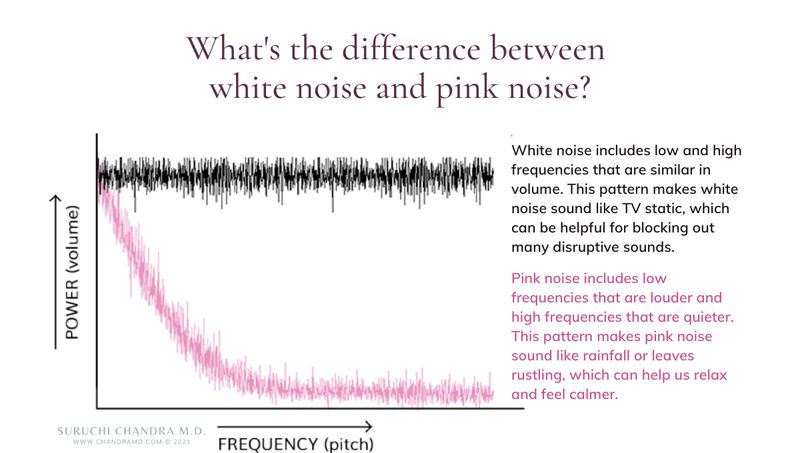
Here is the difference. White noise contains all frequencies at equal intensity. It sounds like static. A TV tuned to a dead channel. It masks other sounds by creating a constant acoustic blanket. Pink noise also contains all frequencies, but the intensity decreases as the frequency increases. It sounds deeper, more like rainfall or wind. The lower frequencies are more prominent, which some researchers think is more similar to the natural sounds humans evolved to sleep with.
I designed a crossover trial. Thirty nights with white noise, thirty nights with pink noise, randomized order, two-week washout period in between. I used a Dreem 2 headband for polysomnography data. I tracked sleep onset latency, deep sleep percentage, REM percentage, sleep efficiency, and number of wake events. I also kept a subjective sleep quality diary every morning. Mike rated my morning mood on a scale of one to ten. He said I was a seven point two on pink noise nights and a six point eight on white noise nights. I told him his rating system was unnecessarily precise. He said that was rich coming from someone who measures her sleep in twelve different metrics.
Sleep Quality Score
Score your sleep quality with a 10-question assessment covering latency, efficiency, and daytime function.
All data stays in your browser — we never see it.
The results surprised me. White noise improved my sleep onset latency by an average of eight minutes compared to silence. That is consistent with the literature. A 2021 meta-analysis by Ebben and colleagues found that white noise reduces sleep onset latency by about six to ten minutes in noise-sensitive individuals. It also reduced my number of wake events by about one per night. Not dramatic, but measurable.
Pink noise, on the other hand, improved my deep sleep percentage by fourteen percent. Fourteen percent. That is not a small effect. That is the difference between waking up groggy and waking up refreshed. My REM sleep also increased by about nine percent. My sleep efficiency went from eighty-seven percent to ninety-one percent. Subjectively, I felt more rested on pink noise nights. I needed less coffee. I was less irritable with Leo when he refused to put on his shoes in the morning.
Why does pink noise work better? The theory is about brain wave entrainment. Pink noise has been shown to enhance slow-wave activity in the brain. A 2012 study by Ngo and colleagues in Neuron found that acoustic stimulation with pink noise during slow-wave sleep enhanced memory consolidation and increased slow-wave amplitude. The mechanism is not fully understood, but it seems like the rhythmic nature of pink noise helps synchronize neural oscillations, making deep sleep more stable and efficient.
Sleep Cycle Calculator
Calculate your optimal bedtime based on 90-minute sleep cycles. Enter your wake-up time and get 5 perfect bedtimes.
All data stays in your browser — we never see it.
White noise, by contrast, is better at masking disruptive sounds. If you live in a noisy environment, white noise might be more useful because it covers a broader frequency range. If you live in a quiet environment and your main goal is to enhance deep sleep, pink noise seems to have the edge. I now use pink noise at home and white noise when I travel. Best of both worlds.
Volume matters. A lot. I measured the decibel levels that worked best for me. Fifty decibels was the sweet spot. That is about the volume of a quiet conversation. Anything above sixty decibels started to disrupt my sleep architecture. Anything below forty decibels was not effective at masking sounds. I use a decibel meter app on my phone to calibrate my machine every few weeks. Yes, I am that person.
Not everyone responds the same way. I had a client who hated pink noise. She said it sounded like a washing machine. She preferred brown noise, which is even deeper than pink noise, with more emphasis on the lowest frequencies. It sounds like distant thunder. She slept great with it. Another client preferred green noise, which is optimized to sound like nature. There is no one-size-fits-all. Your brain has preferences. The only way to know is to experiment.
Bedtime Finder
Find your ideal bedtime based on your current sleep habits and how you feel. Get a realistic adjustment plan.
All data stays in your browser — we never see it.
Here is my recommendation. If you are new to sleep sounds, start with pink noise at fifty decibels. Try it for two weeks. Track your sleep with a wearable or a diary. Then try white noise for two weeks. Compare. If you have a wearable that tracks deep sleep, look at that metric specifically. That is where the biggest difference shows up. If you do not have a wearable, just go by how you feel in the morning. Your subjective experience matters. Science is important, but so is your own body.
One warning: do not use your phone as a noise machine unless it is plugged in across the room. The temptation to check notifications is real. And the blue light, even on night mode, is not doing you any favors. I use a dedicated LectroFan machine. It has no WiFi, no Bluetooth, no screen. Just sound. It is boring and perfect.
P.S. Maple hates the noise machine. She sleeps in the hallway now. I feel guilty about it. But I sleep better. Sorry, Maple. Mommy needs her slow waves.
What is the difference between white noise and pink noise?
White noise contains all frequencies at equal intensity, sounding like static. Pink noise also contains all frequencies but with decreasing intensity at higher frequencies, sounding deeper like rainfall or wind.
Which is better for sleep: white noise or pink noise?
Pink noise improved deep sleep by 14% in my 60-night trial. White noise is better for masking disruptive sounds in noisy environments. Pink noise seems to enhance slow-wave activity through brain wave entrainment.
What volume should sleep noise be played at?
50 decibels is the sweet spot — about the volume of a quiet conversation. Above 60 decibels disrupts sleep architecture. Below 40 decibels is not effective at masking sounds.
Can sleep sounds improve memory consolidation?
Yes. A 2012 study found pink noise acoustic stimulation during slow-wave sleep enhanced memory consolidation and increased slow-wave amplitude. The rhythmic nature helps synchronize neural oscillations.
Are there alternatives to white and pink noise?
Yes. Brown noise is deeper with more low-frequency emphasis. Green noise mimics natural sounds. Some people prefer nature sounds like rain or ocean waves. Experiment to find what works for your brain.
