At 2:14 AM on a Wednesday, I woke up to a sound that was not quite snoring. It was a gasp. A choking sound. Like someone was drowning in their own throat. I rolled over and looked at Mike. His mouth was open. His chest was heaving. Then he stopped. Completely stopped. For eleven seconds. I counted. Then another gasp. I had been a sleep scientist for eight years. And I had missed this in my own husband.
Sleep apnea is the most underdiagnosed sleep disorder in America. The American Sleep Apnea Association estimates that twenty-two million Americans have sleep apnea. Eighty percent of them are undiagnosed. That means about eighteen million people are walking around with a condition that increases their risk of heart attack, stroke, diabetes, and car accidents. And they have no idea.
Here is what sleep apnea actually is. It is a collapse of the upper airway during sleep. Your throat muscles relax. Your tongue falls back. Your airway narrows or closes completely. You stop breathing. Your oxygen level drops. Your brain panics and sends a surge of adrenaline to wake you up just enough to reopen the airway. You gasp. You snort. You fall back asleep. And you have no memory of any of it. This can happen five times an hour. Or thirty. Or a hundred. Every time it happens, your sleep is fragmented. Your heart is stressed. Your brain is deprived of oxygen.
There are two types. Obstructive sleep apnea is the most common. It is caused by physical blockage of the airway. Central sleep apnea is less common and is caused by the brain failing to send the signal to breathe. Both are serious. Both require medical treatment.
Sleep Quality Score
Score your sleep quality with a 10-question assessment covering latency, efficiency, and daytime function.
All data stays in your browser — we never see it.
The warning signs are easy to miss if you do not know what to look for. Loud, chronic snoring is the most obvious one. Not occasional snoring after a few drinks. I am talking about nightly, room-shaking snoring that has gotten progressively worse over time. Mike snored at about fifty-two decibels. That is louder than a normal conversation. I had normalized it. I wore earplugs. I told myself it was just snoring. It was not just snoring.
Gasping or choking during sleep is another red flag. If your partner tells you that you stop breathing and then gasp for air, that is apnea. Full stop. No other condition causes that pattern. I had been hearing Mike gasp for months. I told myself he was just having bad dreams. I was wrong.
Excessive daytime sleepiness is the next big sign. Not just feeling tired. I am talking about falling asleep during meetings. Dozing off while driving. Needing a nap every afternoon just to function. Mike was drinking three cups of coffee before noon and still yawning by 2 PM. He thought it was just age. He was thirty-nine. It was not age. It was his airway collapsing eighty times a night.
Sleep Debt Tracker
Track your sleep debt over time. Log your actual sleep vs your goal and see your accumulated deficit.
All data stays in your browser — we never see it.
Morning headaches are common too. The oxygen desaturation and carbon dioxide buildup during apneic episodes cause vascular changes that lead to headaches. Mike had been waking up with headaches two or three times a week. He blamed his pillow. He bought four different pillows. None of them helped. Because the problem was not his pillow. It was his throat.
High blood pressure, especially if it is resistant to medication, is strongly associated with sleep apnea. The repeated oxygen drops trigger sympathetic nervous system activation, which raises blood pressure. Mike's BP was 142 over 88 at his last physical. His doctor wanted to start medication. I insisted on a sleep study before anything else.
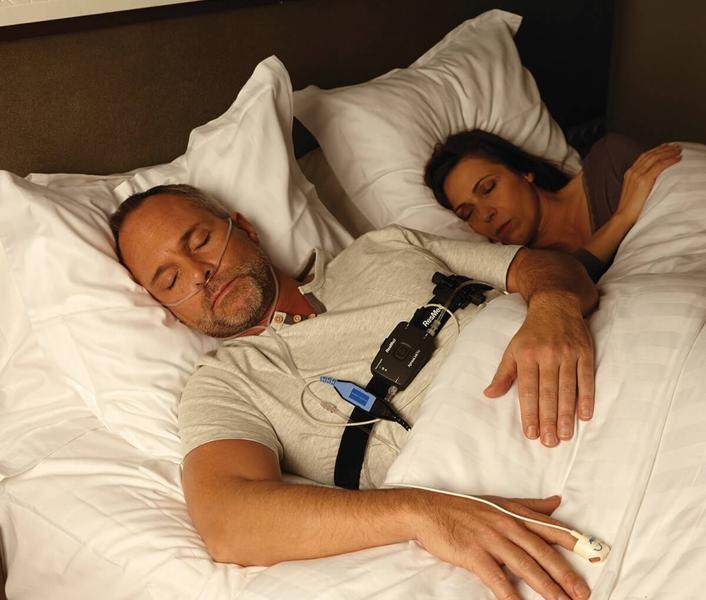
The at-home sleep test is simple and effective. You wear a small device on your finger that measures oxygen saturation and heart rate. You wear a nasal cannula that measures airflow. You wear a chest band that measures breathing effort. You sleep in your own bed. The next day, you return the device. The data tells the story. Mike's apnea-hypopnea index was twenty-three. That means he had twenty-three breathing events per hour. Moderate sleep apnea. The cutoff for mild is five. For severe, it is thirty. He was well into the danger zone.
Bedtime Finder
Find your ideal bedtime based on your current sleep habits and how you feel. Get a realistic adjustment plan.
All data stays in your browser — we never see it.
Treatment options depend on severity. For mild cases, weight loss, positional therapy, and oral appliances can help. For moderate to severe cases, CPAP is the gold standard. Continuous Positive Airway Pressure. A machine blows air through a mask, keeping your airway open. Mike was resistant. He said he would look like Darth Vader. I told him Darth Vader had excellent respiratory support. He did not appreciate the joke.
He got a CPAP. It took two weeks to get used to it. The initial few nights were rough. He ripped the mask off in his sleep. He complained about the noise. He looked ridiculous. But by week three, he was sleeping through the night. His snoring stopped completely. His morning headaches disappeared. His energy improved. His blood pressure dropped to 128 over 78. He stopped drinking coffee after noon because he did not need it anymore.
If you suspect sleep apnea in yourself or your partner, do not wait. The risks are real and they accumulate over time. Get a sleep study. It could save your life. It probably saved Mike's.
P.S. Mike now calls his CPAP his "sleep jetpack." He says it makes him feel like an astronaut. I think he just likes having an excuse to wear a mask to bed. Either way, he is breathing. And that is what matters.
What is the difference between snoring and sleep apnea?
Snoring is vibration of airway tissues. Sleep apnea is complete or partial airway collapse causing breathing cessation. Key differentiator: apnea involves gasping, choking, and oxygen drops that the person does not remember.
How many breathing events per hour indicate sleep apnea?
An apnea-hypopnea index (AHI) of 5-15 is mild, 15-30 is moderate, and over 30 is severe. Even mild apnea causes significant sleep fragmentation and cardiovascular stress over time.
Can sleep apnea cause high blood pressure?
Yes. Repeated oxygen drops trigger sympathetic nervous system activation, raising blood pressure. Many patients with resistant hypertension have undiagnosed sleep apnea that resolves with CPAP treatment.
Is an at-home sleep test as accurate as a lab study?
At-home tests are 85-90% accurate for diagnosing moderate to severe obstructive sleep apnea. They may miss mild cases or central sleep apnea. A lab polysomnography is needed for complex cases or when home results are inconclusive.
What happens if sleep apnea goes untreated?
Untreated sleep apnea increases risk of heart attack by 30%, stroke by 60%, type 2 diabetes by 50%, and motor vehicle accidents by 7-fold. It also causes chronic sleep deprivation that mimics aging and cognitive decline.
