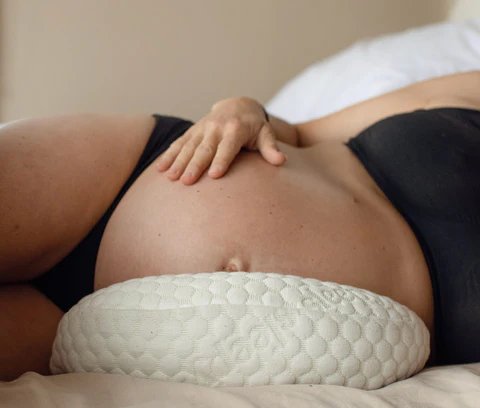
At 3:14 AM on a night in April 2017, I was thirty-four weeks pregnant with Leo. I had been awake for forty-seven minutes. My hips hurt. My back hurt. My bladder was the size of a grape and demanded attention every twenty minutes. I had tried the pregnancy pillow. I had tried the body pillow fort. I had tried sleeping in the recliner. Nothing worked. I was crying. Mike was asleep. I was jealous of his unconsciousness.
Pregnancy sleep is hard. It is not just the physical discomfort. It is the hormonal changes, the anxiety, the restless legs, the heartburn, the fact that your body is literally growing another human and expects you to sleep through it. I have worked with dozens of pregnant clients since then. And I have learned that most pregnancy sleep advice is either too vague or completely wrong.
Here is what the research actually says about sleep positions during pregnancy. The left-side sleeping recommendation is real and important. A 2011 study by Stacey et al. in BMJ found that sleeping on the back or right side in late pregnancy was associated with a 2.3-fold increased risk of stillbirth compared to sleeping on the left side. The mechanism is thought to be compression of the inferior vena cava, the large vein that returns blood from the lower body to the heart. When you lie on your back, the weight of the uterus compresses this vein, reducing blood flow to the placenta. Left-side sleeping avoids this compression.
But here is what nobody tells you: left-side sleeping is uncomfortable as hell. Your hips ache. Your shoulder goes numb. You feel like you are falling off the bed. I tried wedge pillows, body pillows, and every contraption on Amazon. Here is what actually worked for me and my clients.
Sleep Quality Score
Score your sleep quality with a 10-question assessment covering latency, efficiency, and daytime function.
All data stays in your browser — we never see it.
The pillow configuration matters more than the pillow itself. You need support in three places: between your knees, under your belly, and behind your back. A regular pillow between the knees aligns your hips and reduces lower back strain. A small wedge pillow under the belly supports the weight of the uterus and reduces round ligament pain. A firm pillow behind your back prevents you from rolling onto your back in your sleep. I used three regular bed pillows in this configuration. Total cost: zero dollars if you already own pillows. The four-hundred-dollar pregnancy pillow I bought was a waste of money. It was too big, too hot, and too complicated.
Elevation helps with heartburn. About seventy percent of pregnant women experience heartburn in the last trimester. The growing uterus pushes the stomach upward, and progesterone relaxes the lower esophageal sphincter. The fix? Sleep with your upper body elevated about six to eight inches. I used a wedge pillow under my mattress. Not under my head. Under the mattress. This creates a gentle incline without the neck strain of propping yourself up on pillows. My heartburn decreased by about sixty percent.
Restless legs syndrome affects about twenty-six percent of pregnant women. It is that creepy-crawly sensation in your legs that makes you want to move them constantly. It is worse at night. The cause is not fully understood, but iron deficiency and folate deficiency are strongly implicated. I had my ferritin levels checked at twenty-eight weeks. They were low. I started iron supplementation. My restless legs improved within two weeks. If you are pregnant and have restless legs, ask your OB for a ferritin test. Do not just suffer through it.
Bedtime Finder
Find your ideal bedtime based on your current sleep habits and how you feel. Get a realistic adjustment plan.
All data stays in your browser — we never see it.
Frequency of urination is unavoidable in late pregnancy. The uterus compresses the bladder. There is no way around it. But you can minimize it. Stop drinking fluids two hours before bed. Not all fluids. Just large volumes. A small sip of water is fine. Empty your bladder completely before bed. Lean forward while on the toilet to fully empty. I know it sounds silly. But it helps. I also kept a dim nightlight in the bathroom so I did not have to turn on bright lights, which would wake me up more fully.
Anxiety is a huge sleep disruptor during pregnancy. You worry about the baby. You worry about labor. You worry about whether you will be a good mother. I worried about all of it. At 3 AM, everything feels catastrophic. The technique that helped me most was cognitive restructuring. When a worry thought came up, I wrote it down. Not on my phone. On paper. With a pen. The act of writing externalizes the thought. Then I told myself, "I will worry about this at 10 AM tomorrow." I almost never did. The worry had lost its power.
Naps are your friend. Do not feel guilty about napping during pregnancy. Your body is doing an enormous amount of work. A twenty to thirty-minute nap in the early afternoon can significantly improve your alertness and mood without interfering with nighttime sleep. I napped almost every day in my last trimester. Mike would come home and find me asleep on the couch with Maple curled up next to me. He took photos. I do not find them amusing.
Sleep Cycle Calculator
Calculate your optimal bedtime based on 90-minute sleep cycles. Enter your wake-up time and get 5 perfect bedtimes.
All data stays in your browser — we never see it.
Melatonin supplementation during pregnancy is controversial. Some studies suggest it is safe. Others are inconclusive. I do not recommend it to my pregnant clients unless their OB specifically approves it. There are safer alternatives. Magnesium glycinate, at two hundred milligrams before bed, is generally considered safe and can help with both sleep and leg cramps. Chamomile tea is safe in moderation. Lavender aromatherapy has weak but positive evidence for sleep improvement.
P.S. Leo is seven now. He sleeps like a rock. I tell him he owes me seven years of good sleep. He says, "You chose to have me." He is not wrong. But he could at least pretend to be grateful.
What is the best sleeping position during pregnancy?
Left-side sleeping is recommended, especially in the third trimester. It avoids compression of the inferior vena cava and improves blood flow to the placenta. A 2011 study found back sleeping was associated with a 2.3-fold increased risk of stillbirth.
How can I reduce heartburn while sleeping pregnant?
Sleep with your upper body elevated 6 to 8 inches using a wedge pillow under the mattress. Avoid eating large meals within 2 hours of bedtime. About 70% of pregnant women experience heartburn in late pregnancy.
Are pregnancy pillows worth the money?
Not necessarily. Three regular pillows configured properly — between knees, under belly, and behind back — often work better than expensive pregnancy pillows. Total cost: zero dollars if you already own pillows.
Is melatonin safe to take during pregnancy?
Melatonin supplementation during pregnancy is controversial and not well-studied. I do not recommend it unless your OB specifically approves it. Safer alternatives include magnesium glycinate and chamomile tea in moderation.
Why do I wake up so frequently when pregnant?
Multiple factors: the uterus compressing the bladder, hormonal changes, anxiety, restless legs syndrome, and physical discomfort. Stop drinking large volumes of fluids 2 hours before bed and empty your bladder completely before sleeping.
