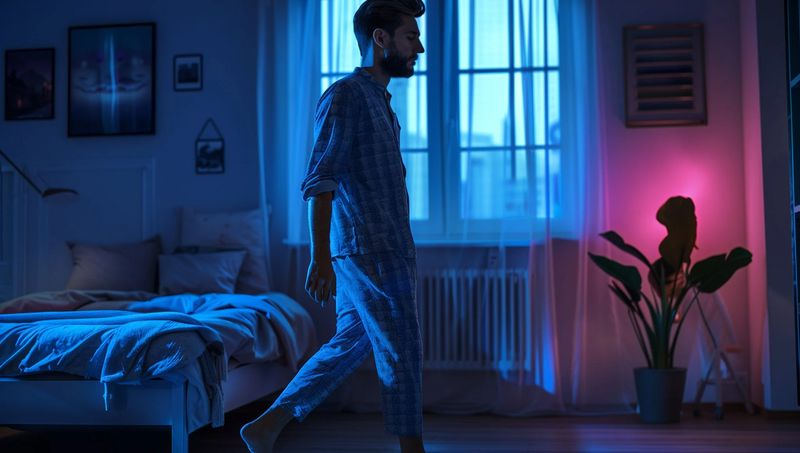
At 2:14 AM on a Saturday in March, my phone rang. It was my mother. "Your brother is missing," she said. My heart stopped. "He sleepwalked out of the house. The front door is open." I grabbed my keys and drove to their house in twenty minutes. We found him in the backyard, standing next to the fence, staring at the neighbor's dog. He was barefoot. It was thirty-four degrees. He had no idea how he got there.
My brother has been sleepwalking since he was eight. He is thirty-six now. He has cooked full meals in his sleep. He has driven his car to the grocery store. He once rearranged all the furniture in his living room at 3 AM and woke up convinced his wife had hired movers as a prank. Sleepwalking, or somnambulism, is not funny. It is not quirky. It is a serious parasomnia that can injure you or the people you love.
Here is what is happening in the brain during a sleepwalking episode. Sleepwalking occurs during deep sleep, specifically stage N3 slow-wave sleep. During this stage, your brain should be essentially offline. But in sleepwalkers, there is a partial arousal. The motor cortex wakes up enough to coordinate movement. The prefrontal cortex stays asleep, which means there is no judgment, no awareness, no memory formation. It is like your body is awake but your mind is still dreaming.
The prevalence is about four percent in adults and seventeen percent in children. It runs in families. Twin studies show a strong genetic component. If one identical twin sleepwalks, the other has about a fifty percent chance of also sleepwalking. The risk factors include sleep deprivation, fever, alcohol, sedatives, and stress. Anything that increases deep sleep or fragments sleep architecture can trigger an episode.
Sleep Quality Score
Score your sleep quality with a 10-question assessment covering latency, efficiency, and daytime function.
All data stays in your browser — we never see it.
The danger is real. A 2012 study by Lopez et al. in the journal Sleep Medicine found that sleepwalkers have a forty percent chance of injuring themselves during an episode. Cuts, bruises, burns, falls, and car accidents are all documented outcomes. My brother once tried to climb out a next-story window. He was stopped by a screen that he could not figure out how to open. Thank God for small mercies.
So how do you stop it? Medication is rarely the answer. Benzodiazepines can suppress deep sleep and reduce episodes, but they come with dependency risks and next-day grogginess. I do not recommend them except in severe cases under close medical supervision. The non-pharmacological approaches are safer and often more effective.
Sleep hygiene is the foundation. Regular sleep schedule. Consistent bedtime. Adequate sleep duration. Sleep deprivation is the single biggest trigger for sleepwalking. When my brother started prioritizing sleep, his episodes dropped from three per week to one per month. It is not sexy. But it works.
Sleep Debt Tracker
Track your sleep debt over time. Log your actual sleep vs your goal and see your accumulated deficit.
All data stays in your browser — we never see it.
Stress management is critical. My brother's episodes spike during work deadlines. He is a financial analyst. Tax season is his personal hell. He now does twenty minutes of progressive muscle relaxation before bed during high-stress periods. His episode frequency during tax season dropped by about sixty percent.
Safety modifications are non-negotiable. Lock windows and doors. Remove sharp objects from the bedroom. Put alarms on bedroom doors. Sleep on the ground floor if possible. My brother now sleeps in the guest room on the main floor. His wife installed a motion sensor alarm on their bedroom door. It beeps if he gets up. She says it is annoying. She also says it is better than finding him in the backyard again.
Alcohol is a major trigger. It increases deep sleep in the before anything else half of the night, which is when sleepwalking typically occurs. My brother used to have a glass of wine before bed. He stopped. His episodes decreased by about forty percent. He misses the wine. He does not miss waking up in the driveway.
Bedtime Finder
Find your ideal bedtime based on your current sleep habits and how you feel. Get a realistic adjustment plan.
All data stays in your browser — we never see it.
If you live with a sleepwalker, here is what you need to know. Do not wake them up abruptly. It can cause confusion, aggression, or disorientation. Gently guide them back to bed. Speak softly. Do not grab them. My mother learned this the hard way when she tried to shake my brother awake during an episode. He swung at her. He had no memory of it the next morning. He cried when she told him.
Scheduled awakenings can help in children. If a child sleepwalks at the same time every night, you wake them up fifteen minutes before the typical episode time. This resets their sleep cycle and prevents the episode. It is tedious. It requires consistency. But it works for about eighty percent of children with predictable timing. I used this with Leo when he had a brief sleepwalking phase at age five. He would get up at 11 PM every night and walk to the kitchen. I set an alarm for 10:45 PM, woke him up for thirty seconds, and put him back to bed. After two weeks, the episodes stopped completely.
Adult sleepwalking is harder to treat. If episodes are frequent or dangerous, see a sleep specialist. You might need a sleep study to rule out other parasomnias or sleep apnea, which can fragment sleep and trigger episodes. My brother had a full polysomnography study. No apnea. No REM behavior disorder. Just good old-fashioned somnambulism. The diagnosis was almost disappointing in its simplicity.
P.S. My brother still sleepwalks occasionally. Last month he woke up holding a spatula. He had been "cooking" in his sleep. His wife found him standing in front of the stove, which was off, making flipping motions with the spatula. He was making imaginary pancakes. At least he is not trying to drive anymore.
What causes sleepwalking?
Sleepwalking occurs during stage N3 deep sleep when there is a partial arousal. The motor cortex wakes up enough to move, but the prefrontal cortex stays asleep, so there is no awareness or memory formation.
How dangerous is sleepwalking?
A 2012 study found sleepwalkers have a 40% chance of injury during an episode — cuts, bruises, burns, falls, and even car accidents. My brother once tried to climb out a second-story window.
Does sleepwalking run in families?
Yes. Twin studies show a strong genetic component. If one identical twin sleepwalks, the other has about a 50% chance. Prevalence is 4% in adults and 17% in children.
How do you stop sleepwalking without medication?
Regular sleep schedule, stress management, alcohol avoidance, safety modifications (locked doors, motion sensors), and scheduled awakenings for children 15 minutes before typical episode time.
Should you wake up a sleepwalker?
No. Abrupt waking can cause confusion, aggression, or disorientation. Gently guide them back to bed while speaking softly. Do not grab them — they may swing without awareness.
